


Package of 5 Sessions
- Rs.5,999.00/-
Trying to conceive? Discover the best lubricant for trying to get pregnant, what to avoid, and how sperm-friendly lubes can improve your chances of conception.
 Dr. Neha Mehta
  28 Apr 2026
  Sexology
  860 Reads
  4 min Read
The shift from intimacy to “trying to conceive (TTC)” can feel overwhelming. What once felt natural can suddenly become scheduled, tracked, and even stressful.
If you’ve found yourself needing lubrication during this phase, you’re not alone. In fact, many couples search for the best lubricant for trying to get pregnant because timing, pressure, and stress often reduce natural arousal.
But here’s the catch: not all lubricants are fertility-friendly. Some may actually reduce your chances of conception without you realizing it.
Let’s break down what truly matters.
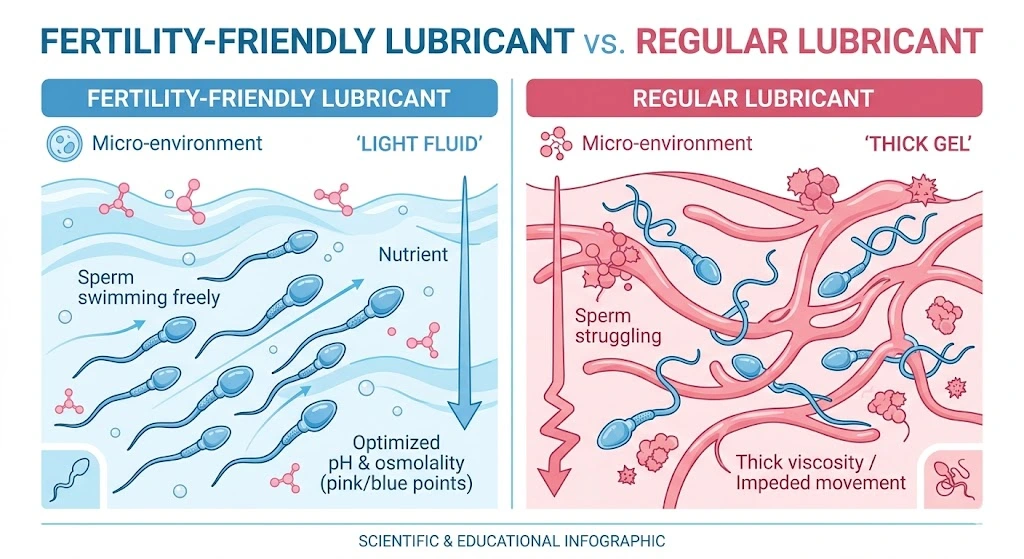
During ovulation, your body produces fertile cervical mucus that helps sperm travel easily toward the egg. Think of it like a natural “highway.”
Most regular lubricants, however, are thick and gel-like. Instead of helping sperm, they act like a barrier—slowing them down or even trapping them.
This is why choosing the best lubricant for trying to get pregnant is crucial—it should support sperm movement, not block it.
? Pairing this with the Best Sex Positions can further support your chances naturally.
_1777370067.webp)
Your vaginal environment is usually slightly acidic, which protects against infections. But sperm need a more alkaline environment to survive and swim properly.
Many standard lubricants maintain acidic pH levels, which can:
✔️ The best lubricant for trying to get pregnant should have a pH between 7.0–8.5, similar to fertile cervical mucus.
This might sound technical, but it’s important.
Some lubricants contain high levels of salts and chemicals. These can pull water out of sperm cells, causing them to shrink and lose movement (motility).
On the flip side, some substances (like plain water) can make sperm swell and burst.
✔️ A fertility-friendly lubricant is iso-osmotic, meaning it keeps sperm healthy, hydrated, and active.
Also Read: 7 Daily Habits That Make Your Relationship Unbreakable
Many couples switch to home remedies thinking they’re safer. Unfortunately, that’s not always true:
So while they seem natural, they are NOT the best lubricant for trying to get pregnant.
When choosing the best lubricant for trying to get pregnant, look for these features:
✔️ Sperm-friendly (does not harm motility)
✔️ pH balanced (alkaline)
✔️ Iso-osmotic (maintains hydration)
✔️ Free from parabens and glycerin
✔️ Clinically tested for conception support
Some well-known options include fertility-focused lubricants like Pre-Seed and Conceive Plus, designed to mimic natural fertile mucus.
Let’s be honest—TTC isn’t just physical; it’s emotional too.
When intimacy becomes scheduled, your body may not respond the same way. Vaginal dryness during this phase is completely normal and often linked to stress not lack of attraction.
Using the best lubricant for trying to get pregnant isn’t just about biology—it’s about making intimacy comfortable again.
_1777370164.webp)
| Feature | Regular Lubricant | Fertility-Friendly Lubricant |
|---|---|---|
| pH Level | Acidic | Alkaline (7.0–8.5) |
| Effect on Sperm | Harmful | Safe |
| Texture | Thick | Light & sperm-friendly |
| Osmolarity | High (dehydrating) | Balanced |
| Purpose | Comfort only | Supports conception |
Trying to conceive doesn’t have to feel mechanical or stressful—and it definitely shouldn’t take away from your connection as a couple. The right choices can make a real difference. Start by switching to the best lubricant for trying to get pregnant—one that supports sperm health instead of working against it. Small changes like this can remove hidden obstacles and bring back comfort during intimacy.
But don’t stop there. If TTC is starting to feel overwhelming or emotionally draining, take it seriously. Open conversations, intentional bonding, and even Couples Therapy can help you reconnect and reduce pressure. Because conception isn’t just about timing—it’s about creating the right physical and emotional environment.
? Make the shift today: choose smarter, fertility-friendly options, prioritize your relationship, and take control of your journey and book your relationship counseling session with the leading experts at My Fit Brain now.
Even a small amount can create a "toxic" local environment for sperm. If you need it for comfort, it’s worth the investment to switch to a sperm-friendly version during your fertile window.
Unfortunately, no. Gravity helps semen stay in the vaginal vault, but if the lubricant has already immobilized the sperm through pH or osmotic shock, they won't be able to "climb" into the cervix regardless of your position.
They are generally more expensive than standard brands, but consider them a specialized medical tool for this specific phase of your life. You only need to use them during your 4–5 fertile days a month!

Online
English, Punjabi, Haryanvi
Couple Counseling, Marital Counselling, LGBTQ, Addiction, Depression

It's 7pm. You've been making decisions since you woke up , wh...
 27 Jun 2026 4 min Read 1k Reads
Think about the last time a conversation with someone you love went wrong. ...
26 Jun 2026 4 min Read 1k Reads 
Nobody told you your childhood was hard. That's part of the probl...
24 Jun 2026 4 min Read 1.4k Reads 
You can be surrounded by people and still feel completely alone. Most...
23 Jun 2026 4 min Read 822 Reads 
Area Of Expertise : Couple Counseling, Marital Counselling, LGBTQ, Addiction, Depression, Family Counseling, Relationship Counselling, Anger Management, Sexual Wellness, Marriage & Couple Counselling
Book a Session
Better mental health at your convince
