


Package of 5 Sessions
- Rs.5,999.00/-
Discover why couples seek Loss of Intimacy in Marriage Therapy even when love still exists. Learn causes of emotional disconnect, signs of fading intimacy
 Dr. Neha Mehta
  22 May 2026
  Marriage & Relationship
  684 Reads
  6 min Read
 _1779270000.jfif)
You still love your partner. You still pick up groceries on the way home, ask about their day, and share the bed. But something has gone quiet. The conversations have shrunk. The touch is rare. You miss them — even when they're sitting right next to you.
This is exactly why so many couples in India quietly book a Loss of Intimacy in Marriage Therapy session. Love hasn't vanished. The closeness has. And no amount of "we're fine, just busy" makes that gap feel smaller.
Most couples confuse the two. They assume that if love exists, the marriage is healthy. That's not how intimacy works.
Love is a feeling. Intimacy is a daily practice — eye contact, shared jokes, vulnerability, knowing your partner's inner world without having to ask. A couple can love each other deeply and still live like emotional roommates.
That gap brings them into therapy. Not a lack of love. A lack of contact.
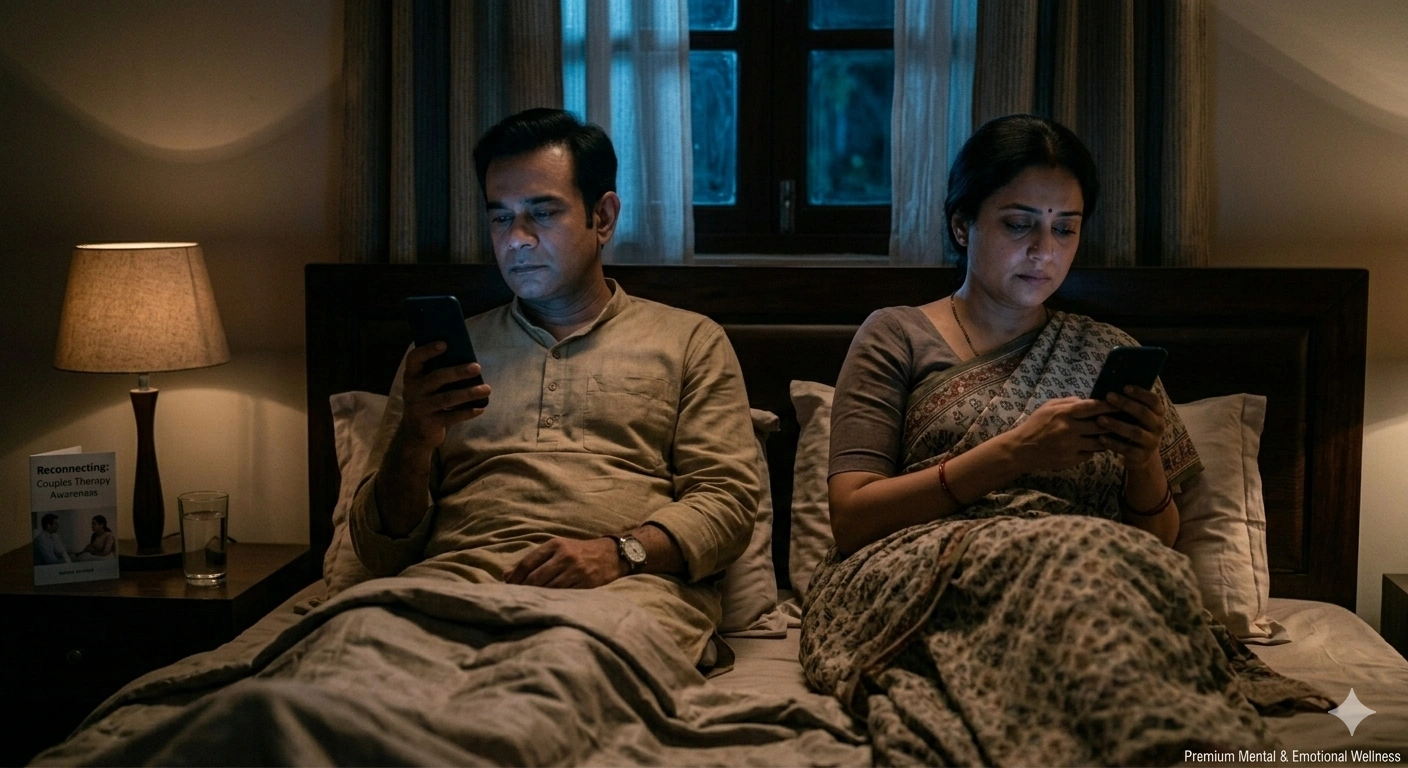
Couples don't wake up one morning and realise they've lost intimacy. The drift builds in small choices, repeated over years.
You scroll instead of talking after dinner. You discuss logistics — bills, kids' homework, the geyser repair — instead of how the day actually felt. Sex becomes scheduled, then rare, then awkward to even bring up.
By the time the emotional disconnect in marriage becomes obvious, the patterns have hardened. Therapy interrupts the drift. It doesn't undo years in one session, but it stops the slide.
Read More: Causes of Emotional Distance in Marriage
Couples often come in asking what went wrong. That question rarely helps. The more honest one: what stopped happening?
In long marriages, intimacy fades not because of a single event but because the small rituals stop — the morning coffee together, the random "thinking of you" text, the unhurried weekend conversations.
Spotting intimacy issues in couples means looking at what went missing, not just what got loud. A good therapist spends the first session mapping exactly that — the absences, not the arguments.
Most couples in this room aren't fighting constantly. They're not on the brink of divorce. They're tired of feeling like strangers under their own roof.
A few patterns repeat almost every time:
None of these mean the marriage is over. They mean it's time to interrupt the pattern. This is where marriage counselling online has shifted the game for Indian couples — the access barrier disappears.
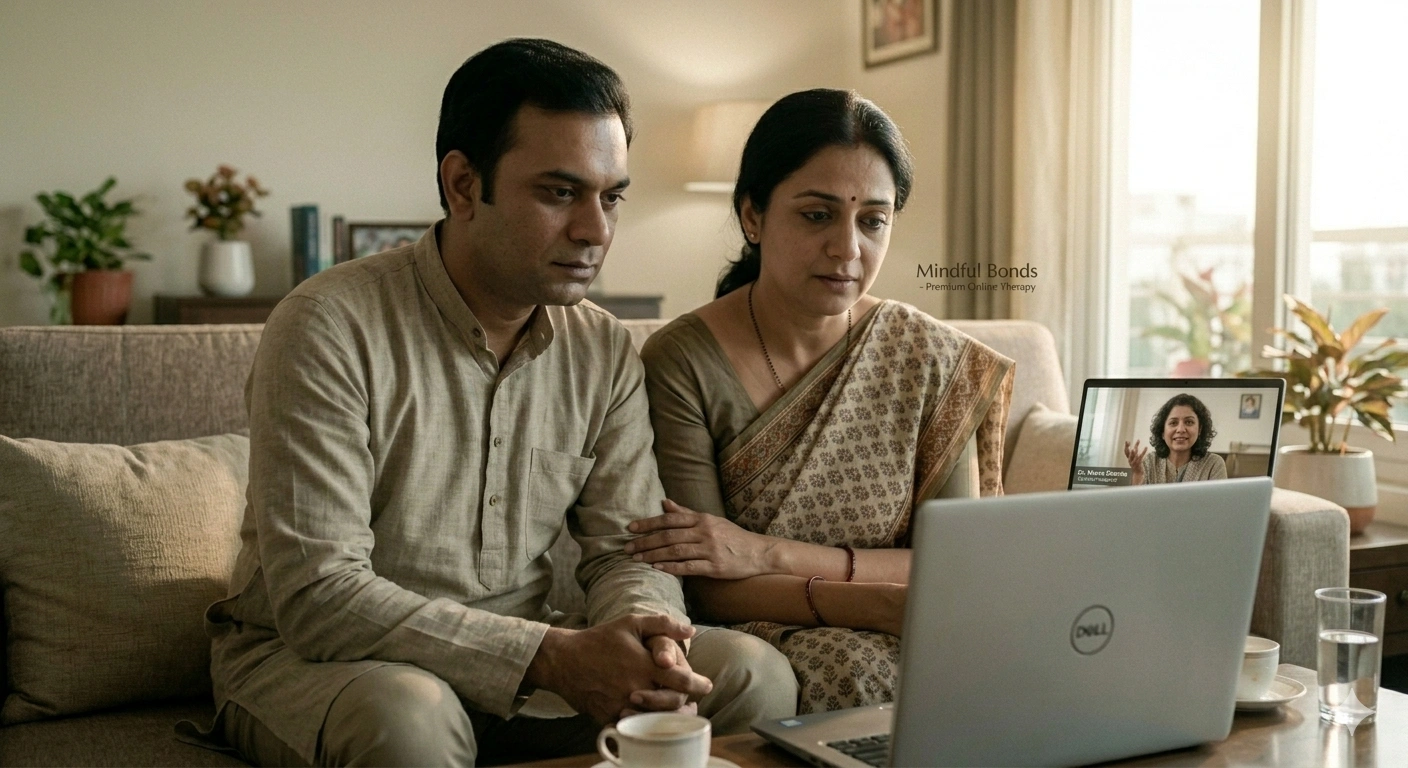
A therapist isn't there to take sides. The job is to give both partners a space where they can actually speak — without defensiveness, without the same fight on loop.
A typical structure looks like this:
A counsellor who knows how to strengthen emotional intimacy with your partner won't ask you to fall in love again. They'll help you start paying attention to each other again. That's where rebuilding emotional connection actually begins.
Walking into a marriage counsellor's clinic still carries stigma in most Indian families. Neighbours notice. Parents ask. People stay silent and stay miserable instead.
Online sessions strip that barrier out. According to the World Health Organization, digital mental health services have expanded access for populations that previously avoided in-person care — and relationship therapy India has shifted noticeably in the last three years for exactly that reason.
Privacy matters. Marriage counselling online lets a couple speak openly when they don't have to explain their visit to anyone — including their own parents. Many couples now starting relationship therapy India would never have walked into a clinic in their own city.
Read More: Importance of Communication About Intimacy in Relationships
Forget the grand gesture. Rebuilding emotional connection in a long marriage is the opposite of dramatic. It's small, repeated, often boring on the surface.
A 15-minute daily check-in with phones in another room. A non-sexual touch ritual — hand-holding on the sofa, a hug before leaving for work. A weekly conversation that doesn't touch kids, money, or logistics. A shared joke that belongs only to you.
Couples who stick with this for six to eight weeks notice real shifts — not because the techniques are magic, but because attention is. The work happens between sessions, in the ordinary moments most partners stopped showing up for. That's how marriage counselling saves a relationship — by rebuilding the small things that quietly went missing.
A good therapist will also push back when you slip. Two weeks in, most couples drop the daily check-in or skip the touch ritual because life happens — a sick parent, a work deadline, a sulking teenager. Therapy creates accountability for the basics that long marriages always lose first.
Most couples seeking Loss of Intimacy in Marriage Therapy aren't on the brink of separation. They're exhausted from feeling distant from someone they still love. That exhaustion is the signal — not the failure.
If any of this sounds like your marriage, waiting for it to sort itself out is the worst move. An emotional disconnect in marriage grows louder the longer it goes ignored. Book a session, sit through the awkward first hour, do the work between sessions. Loving someone and feeling close to them should not be a contradiction inside your own bedroom.
Yes, and intimacy issues in couples are one of the most common reasons partners seek help. Loving someone and feeling emotionally distant from them are two different things, and therapy exists to close that gap.
Most couples see meaningful shifts within six to ten sessions, though deep-rooted patterns can take longer. Consistency matters more than duration.
It works well for most couples. The format removes the stigma barrier and lets partners join from separate locations if needed, which often makes conversations more honest, not less.
Individual sessions still help. A therapist can guide one partner through shifts that change the dynamic at home, even before the other joins.
No. A trained marriage counsellor holds space for both partners equally and identifies patterns rather than assigning blame.

Online
English, Punjabi, Haryanvi
Couple Counseling, Marital Counselling, LGBTQ, Addiction, Depression

It's 7pm. You've been making decisions since you woke up , wh...
 27 Jun 2026 6 min Read 1k Reads
Think about the last time a conversation with someone you love went wrong. ...
26 Jun 2026 6 min Read 1k Reads 
Nobody told you your childhood was hard. That's part of the probl...
24 Jun 2026 6 min Read 1.4k Reads 
You can be surrounded by people and still feel completely alone. Most...
23 Jun 2026 6 min Read 807 Reads 
Area Of Expertise : Couple Counseling, Marital Counselling, LGBTQ, Addiction, Depression, Family Counseling, Relationship Counselling, Anger Management, Sexual Wellness, Marriage & Couple Counselling
Book a Session
Better mental health at your convince
