


Package of 5 Sessions
- Rs.5,999.00/-
Can marriage counselling after infidelity rebuild trust and emotional closeness? Learn how couples heal, reconnect, and recover together.
 Dr. Neha Mehta
  25 May 2026
  Marriage & Relationship
  561 Reads
  6 min Read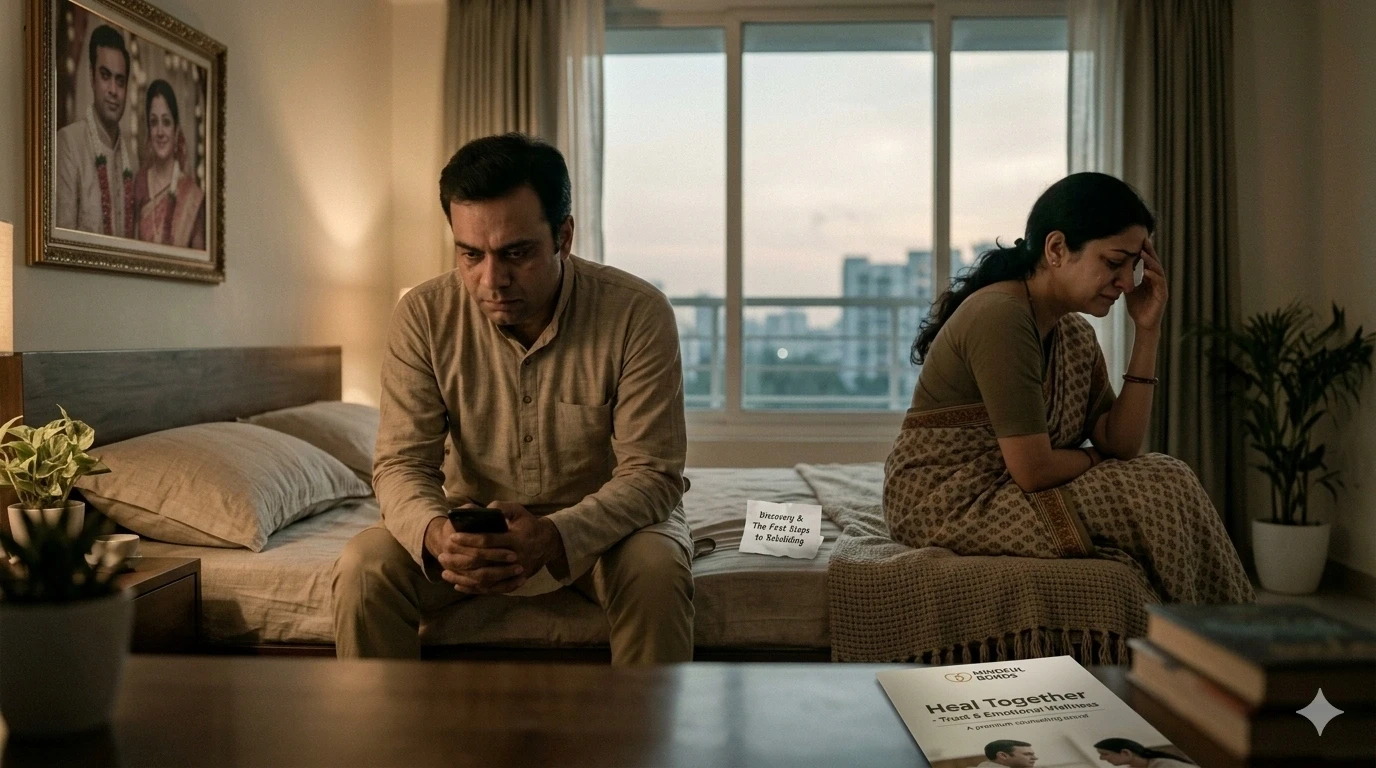
You found out three weeks ago. Or three months. Maybe you've known longer than you let on. Either way, you're sitting across from someone who once felt like home, wondering if the closeness you had can ever come back — or if you're now living with a stranger who shares your bed.
This is the question that brings most couples into Marriage Counselling After Infidelity. Not whether the marriage survives — that's a separate question — but whether two people who hurt each other this deeply can ever feel close again. The honest answer is: sometimes yes, sometimes no, and the work itself is what tells you which.
The first question isn't usually "why?" It's "was any of it real?"
That single question loops on repeat — through old photographs, anniversary dinners, the way they once said your name. The mind retroactively rewrites the marriage. Every kindness becomes suspect. Every "I love you" is questioned.
A therapist's first job is to slow that loop down. Not deny it. Slow it down enough that the betrayed partner can think clearly for the first time in weeks.
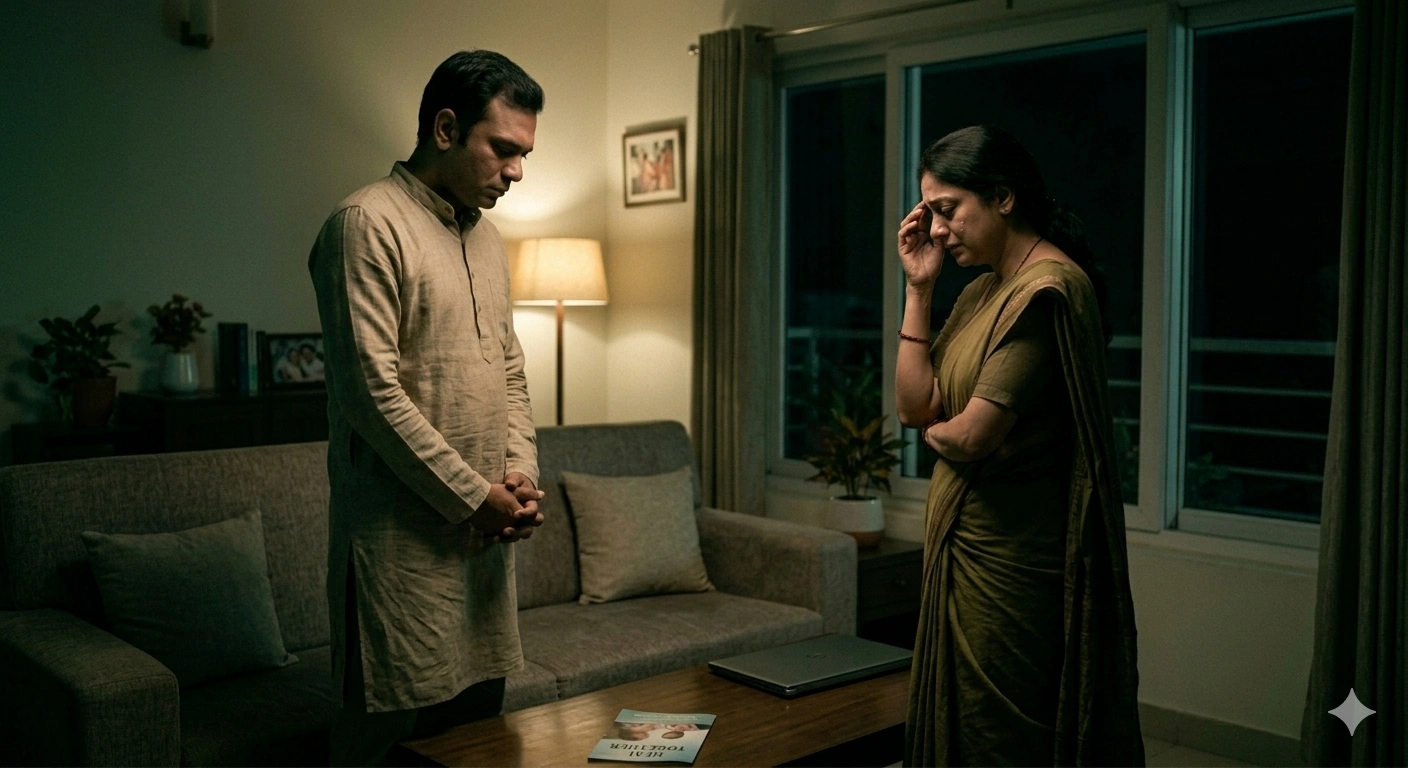
Most couples try to handle the aftermath of an affair privately. They argue. They cry. They have one or two "honest" conversations that quickly turn into interrogations. Then they go silent.
By the time they finally book therapy, both partners are exhausted and reactive. The trust damage has compounded. The conversations at home have all become arguments about the same wound, looping endlessly.
Couples trust issues therapy works better the earlier it starts — not because feelings have to be fresh, but because the patterns haven't fully hardened yet. Couples trust issues therapy after years of unaddressed betrayal takes much longer to move.
Read More: How to Rebuild Trust After Betrayal in Love
The first session is rarely what couples expect. It isn't a confession or a verdict. It's a structured space where both partners can speak without the conversation collapsing into the same loop.
A typical opening session covers:
Establishing ground rules so the session doesn't become another fight.
The partner who broke trust must own what happened, fully and without minimising.
The betrayed partner names what was lost, in their own words.
Neither partner commits to the marriage yet; they commit only to the process of finding out.
Therapy after infidelity isn't about forcing reconciliation. It's about giving both partners enough clarity to choose honestly — together or apart — instead of choosing from a fog of anger.
Recovery from infidelity isn't linear, but it does have recognisable stages.
Most couples pass through some version of:
Rebuilding trust after cheating isn't a checklist. It happens through hundreds of small moments of consistency over months, not through one dramatic apology.
Read More: Emotional Cheating vs Physical Cheating: Which Hurts More?
Most betrayed partners want answers immediately. The therapist's quiet job is to redirect that energy.
"Why did you do it?" rarely produces an answer that helps. The unfaithful partner often doesn't fully understand their own actions yet, so the explanations come out shallow or defensive — which fuels more anger.
A better starting question, which a good therapist will guide you toward, is: "What was missing for you long before the affair, and what was missing for me?" That question opens the room. The "why" answers itself, slowly, as the conversation deepens.
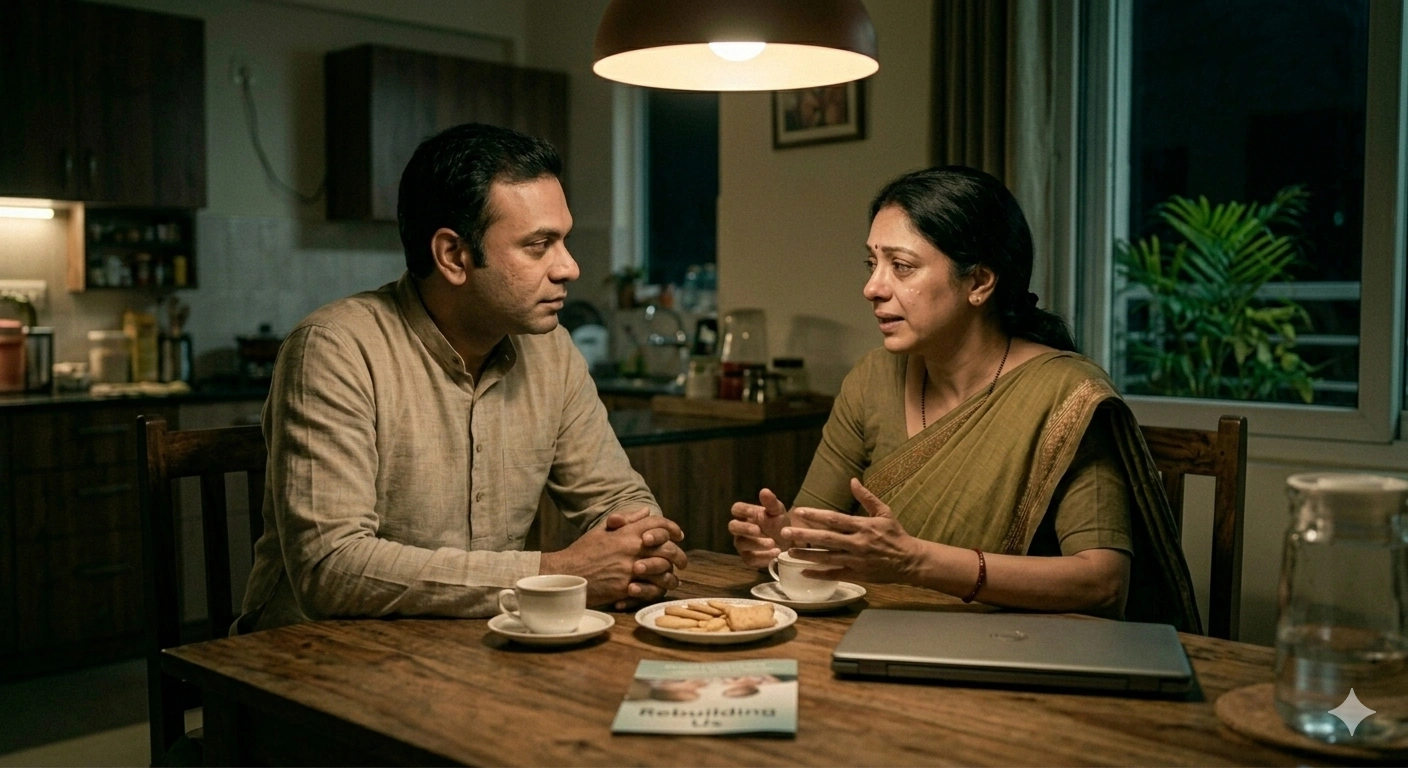
Relationship recovery counselling isn't dramatic. It's not a single conversation where everything gets resolved.
Couples who rebuild successfully report that the work happened in the small, repeated proofs of new behaviour — phones left visible, locations shared without asking, conversations about hard things finished instead of avoided. Relationship recovery counselling is the structure that supports those new patterns until they become the marriage's new default. Rebuilding trust after cheating works on the same logic: consistency over time, not intensity in one moment.
According to Harvard Business Review's work on trust and emotional intelligence, rebuilding trust requires consistent small actions over a sustained period — there's no shortcut, and no grand gesture replaces the daily, boring follow-through.
Emotional healing in marriage runs on a different timeline than logical forgiveness. A betrayed partner can intellectually decide to forgive months before the body catches up. The therapy holds space for both timelines, which is why emotional healing in marriage rarely happens through self-help alone — it needs a trained third presence to keep the work moving.
Not every couple stays together. The honest truth is that some marriages can't recover, and a good therapist will help both partners see that clearly rather than dragging out a slow collapse.
But many marriages do recover — and the ones that do tend to share a few traits. Both partners take responsibility, even when the responsibilities are different. Both engage with the therapy seriously, not as a box to tick. Both accept that the marriage they had is over, and what they're building now is a different marriage with the same two people.
Couples therapy as a turning point often happens in the third or fourth month of consistent work, not the first session. That's when the new patterns start feeling natural instead of forced. Therapy after infidelity that ends too early often misses this turning point entirely.
Most couples who book Marriage Counselling After Infidelity aren't certain whether they want to save the marriage. They're certain they don't want to make the decision in the current state of pain.
That's exactly when therapy helps most. It slows the emotional storm enough for both partners to see what they actually want — not what they're reacting against. Whether that decision becomes rebuilding or releasing, doing the work with a trained therapist gives both partners more peace than handling it alone ever will. Book the first session before the patterns harden further.
Yes, many do — though the marriage that emerges is rarely the same one. Couples who rebuild successfully often report a deeper, more honest relationship than they had before the affair.
Yes, but inside the structured space of sessions. Outside the sessions, both partners benefit from agreed-on rules to prevent constant relitigation at home.
Most couples need six months to a year of regular work. Quick fixes don't hold, and the deeper rebuilding is gradual by nature.
A good therapist will surface this early. Genuine remorse and willingness to be transparent are non-negotiable foundations. Without them, the work won't progress meaningfully.
Often yes, and many therapists recommend it. Individual sessions help each partner process their own emotions; joint sessions handle the relationship itself.

Online
English, Punjabi, Haryanvi
Couple Counseling, Marital Counselling, LGBTQ, Addiction, Depression

It's 7pm. You've been making decisions since you woke up , wh...
 27 Jun 2026 6 min Read 884 Reads
Think about the last time a conversation with someone you love went wrong. ...
26 Jun 2026 6 min Read 868 Reads 
Nobody told you your childhood was hard. That's part of the probl...
24 Jun 2026 6 min Read 1.1k Reads 
You can be surrounded by people and still feel completely alone. Most...
23 Jun 2026 6 min Read 684 Reads 
Area Of Expertise : Couple Counseling, Marital Counselling, LGBTQ, Addiction, Depression, Family Counseling, Relationship Counselling, Anger Management, Sexual Wellness, Marriage & Couple Counselling
Book a Session
Better mental health at your convince
