


Package of 5 Sessions
- Rs.5,999.00/-
Learn how to stop feeling sad all the time with therapist-backed insights into constant sadness, emotional exhaustion, depression signs, and practical ways to feel happier again naturally.
 Dr. Neha Mehta
  14 May 2026
  Anxiety
  581 Reads
  9 min Read
You wake up and it's already there — that flat, heavy feeling that seems to have no name and no clear cause. You go through the motions of your day. To the outside world, you look fine. But inside, something feels persistently grey. Dull. Empty.
And the worst part is not being able to explain it. Nothing dramatically terrible has happened. You don't have an obvious reason to feel this way. But the sadness is there anyway — quiet, constant, and exhausting. If you keep asking yourself why do I feel sad for no reason, you are not imagining it and you are not alone.
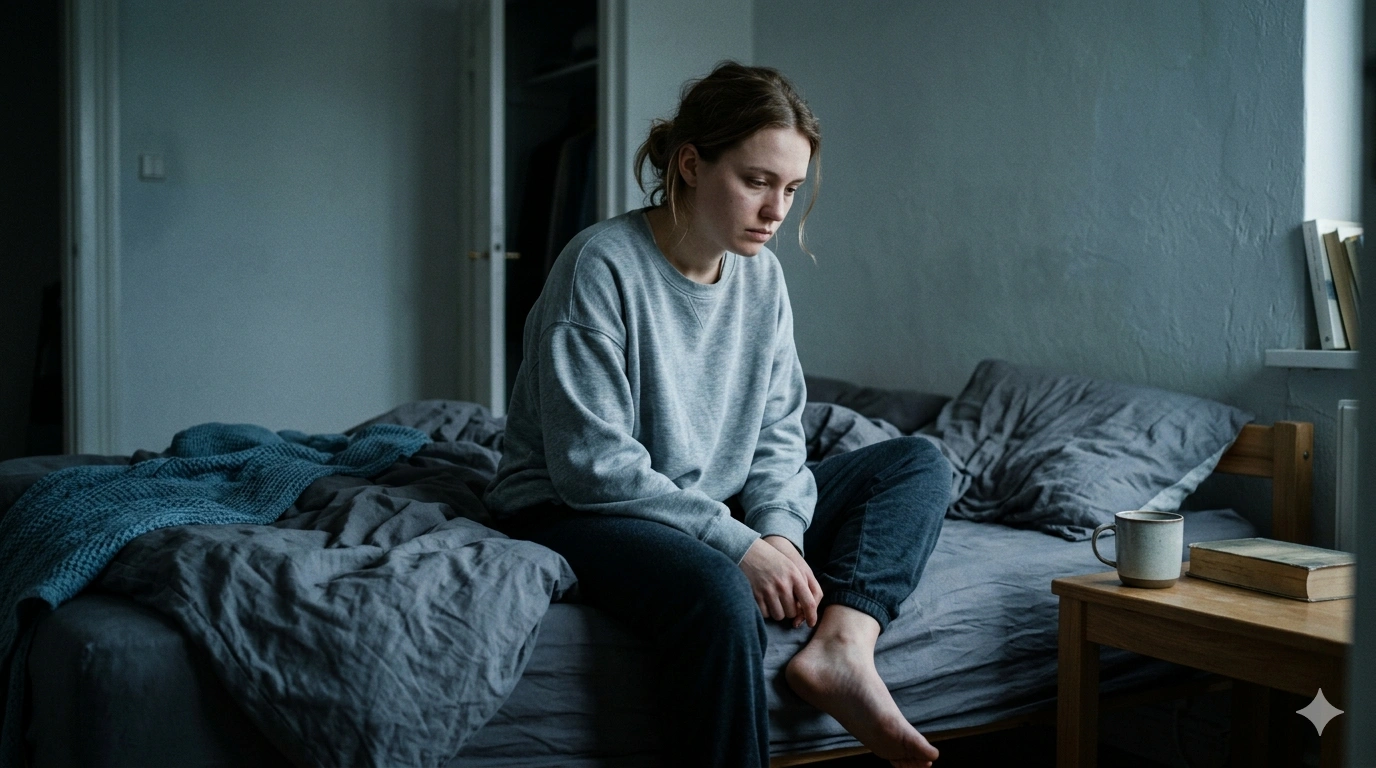
If this sounds like you, you are far from alone. Feeling empty and sad every day is one of the most common reasons people seek support from a therapist. And the first step to understanding how to stop feeling sad all the time is understanding what might actually be causing it.
Here are 10 real reasons why you might be feeling sad all the time — and what you can do about each one.
The most important thing to understand is the difference between sadness and depression — because they require different responses. Many people ask themselves am I depressed or just sad, and the distinction matters.
Sadness is a normal emotional response to a difficult situation. It lifts when the situation changes or when enough time passes.
Depression is a persistent state of low mood, low energy, and diminished interest in life that lasts for weeks or longer — often without a clear external cause. It can feel like sadness, but it can also feel like numbness, emptiness, irritability, or simply a flatness where emotion used to be.
You don't have to feel "bad enough" to have depression. Signs of depression in adults often include subtle but persistent changes: reduced motivation, loss of enjoyment in activities you used to love, social withdrawal, disrupted sleep and appetite, difficulty concentrating, and a pervasive sense that things won't get better.
If you recognise several of these in yourself, that is worth taking seriously. Read more about the signs of emotional exhaustion — often they accompany low mood and go unrecognised.

The relationship between sleep and mood is so strong that sleep deprivation alone can produce every symptom of depression in an otherwise mentally healthy person.
After even a single night of poor sleep, the emotional regulation centre of the brain (the prefrontal cortex) is significantly impaired. Negative events feel more negative. Positive experiences produce less pleasure. Irritability increases. Motivation drops.
Chronic sleep deprivation — consistently getting less than 7 hours over weeks or months — creates a persistent neurochemical state that looks and feels exactly like low-grade depression — one of the most common hidden causes of what causes constant sadness in otherwise healthy people. If your sleep has been poor and you have been feeling persistently sad, addressing the sleep is often the most direct path to improving the mood.
This is not a metaphor. Sunlight directly regulates the production of serotonin — the neurotransmitter most strongly associated with mood stability. It also regulates melatonin, which controls sleep-wake cycles. Without adequate sunlight, both systems are disrupted.
Seasonal Affective Disorder (SAD) is the most well-known version of this, but low sunlight exposure can affect mood year-round — particularly for people who work indoors, spend most of the day at a screen, or live in climates with limited sun. Getting 20 to 30 minutes of natural morning light is one of the simplest, most evidence-backed answers to how to feel happy again when you are sad and struggling to find the energy to do more.
Read More: Meditation to reduce stress
Physical factors are dramatically underestimated as causes of persistent low mood. Deficiencies in vitamin D, iron, B12, and thyroid hormones are all well-documented contributors to depression-like symptoms. So is chronic dehydration, a consistently poor diet, and insufficient exercise.
Before attributing persistent sadness purely to psychological causes, it is worth getting basic bloodwork done. Many people discover their "depression" was substantially driven by a vitamin D deficiency or borderline hypothyroidism — both of which are straightforwardly treatable once identified. This is one of the most overlooked answers to what causes constant sadness that has no obvious emotional explanation.
Sometimes persistent sadness is not sadness from the present. It is sadness from the past that was never fully processed.
Grief that was pushed aside, a loss that was minimised ("I should be over it by now"), trauma that was never addressed, a relationship that ended without proper closure — all of these can sit beneath the surface, generating a low-level emotional static that presents as persistent, sourceless sadness.
The body keeps the score. Emotions that are not processed do not disappear. They compress, and they find other ways to express themselves. If you have been feeling empty and sad every day without understanding why, unprocessed past emotion is one of the most common root causes.

Loneliness is one of the most common and least discussed causes of how to stop feeling low all the time. And it doesn't require physical isolation. You can be surrounded by people — in a family, in a relationship, in a workplace — and feel profoundly alone if those connections lack depth, authenticity, or genuine understanding.
Research consistently identifies loneliness as one of the strongest predictors of depression and anxiety. If your relationships feel superficial, if you feel fundamentally unseen or unknown by the people around you, that absence registers as something closer to grief than to loneliness. The hunger for real connection is a deep human need — and when it is not met, the emotional cost is real.
This is something therapy often uncovers: people who are persistently unhappy are often living a life that doesn't reflect what actually matters to them.
A career chosen for security rather than meaning. Relationships maintained out of obligation. Activities performed out of habit or duty rather than desire. A daily life full of things that don't feel like yours.
According to the World Health Organization, depression is the leading cause of disability worldwide — and one of its most common triggers is prolonged disconnection from purpose and meaning. Living with persistent low mood often requires asking the difficult question: is this the life I actually want, or the life I ended up in? Our guide on how to stay calm when everything feels out of control can help you navigate this process day by day.
Grief is most commonly associated with bereavement — but people grieve many things. The end of a relationship. The loss of a job or an identity. A missed opportunity that cannot be revisited. A version of yourself you had to let go of. A childhood that wasn't what it should have been.
When these losses are not acknowledged as real grief — when you push through and don't give them the weight they deserve — they create a background sadness that is hard to identify because it doesn't have an obvious name. Allowing yourself to grieve what was lost, even if it seems too small to warrant it, is often a significant turning point. You can also explore our guide on 7 self-care strategies to reduce depression symptoms for daily practices that support this process.
Sometimes the sadness is not primarily psychological or situational. Brain chemistry — the balance of neurotransmitters like serotonin, dopamine, and norepinephrine — can be dysregulated in ways that produce persistent low mood regardless of external circumstances.
This is not a personal failure or a character weakness. It is a physiological state that can be addressed through a combination of therapy, lifestyle changes, and in some cases medication, as recommended by a qualified professional. If you have been asking why do I feel sad for no reason despite everything seeming fine on the outside, neurochemical imbalance may be part of the answer.
If you have tried lifestyle changes and psychological self-help without improvement, it may be worth speaking to a doctor or psychiatrist about whether there is a neurochemical component to your low mood. A Depression Therapist Online India can guide you through this assessment process in a safe, accessible way.
Perhaps the most overlooked reason people stay stuck and can't figure out how to stop feeling sad all the time: they keep it to themselves.
The stigma around mental health — particularly in India, where admitting emotional difficulty is still often seen as weakness — prevents enormous numbers of people from accessing support that would genuinely help. People silently endure for months, sometimes years, before reaching out.
You do not need to be in crisis to deserve support. Persistent low mood that is affecting your quality of life is a completely legitimate reason to talk to a therapist. This is especially true if you have been wondering how to feel happy again when you are sad but can't seem to find your way back on your own. Online Depression Counselling India has made this support more accessible than ever — confidential, affordable, and available from anywhere.
Persistent sadness is not a character flaw, a sign of ingratitude, or something you simply have to endure. It is a signal worth listening to — and more often than not, it is pointing to something specific and addressable.
Start by identifying which of the ten reasons above resonates most with you. Give it honest attention. Make one change.
And if the sadness feels too big, too persistent, or too overwhelming to address alone — please reach out. Book a session with a licensed therapist through Online Depression Counselling India at My Fit Brain — confidential, accessible from anywhere in India, and with a team that genuinely understands.
Sadness is usually connected to a specific event or situation, tends to lift over time, and doesn't prevent you from functioning in most areas of life. Depression is more pervasive — it affects motivation, concentration, sleep, appetite, and the ability to feel pleasure, often without a clear external cause. It tends to persist for weeks or longer rather than lifting naturally. If low mood has been present for more than two weeks and is affecting your ability to function, it is worth speaking to a mental health professional.
Mild, situational low mood often does resolve on its own as circumstances change. However, persistent sadness with no clear cause — particularly if it has lasted more than a few weeks — is less likely to resolve without some form of intervention. Lifestyle changes (sleep, exercise, nutrition, sunlight, social connection) can make a meaningful difference. Professional support is recommended if these don't provide sufficient relief.
Experiencing some sadness most days is not uncommon during genuinely difficult periods. But feeling persistently sad or empty on a daily basis that has no clear cause, or that significantly interferes with your daily life, is not something to normalise or simply push through. This is a signal that something needs attention — whether that is a lifestyle factor, an unprocessed emotion, or a clinical condition.
Yes, meaningfully so. Exercise has been shown in multiple studies to reduce symptoms of mild to moderate depression, in some cases as effectively as antidepressant medication. It does this by increasing serotonin and dopamine, reducing cortisol, and improving sleep quality. Diet affects brain chemistry more directly than most people realise. These are not substitutes for therapy when therapy is needed — but they are genuine, evidence-based interventions that can produce real improvement.
Sharing how you are feeling with someone you trust — a friend, family member, or partner — can provide meaningful relief, reduce isolation, and often prompts people to seek professional help sooner. You don't owe anyone an explanation, but keeping a persistent low mood entirely private tends to increase both the stigma you feel internally and the duration of the suffering. If talking to someone you know feels too difficult, speaking to a therapist is a safe and private alternative.

Online
English, Punjabi, Haryanvi
Couple Counseling, Marital Counselling, LGBTQ, Addiction, Depression

It's 7pm. You've been making decisions since you woke up , wh...
 27 Jun 2026 9 min Read 1.2k Reads
Think about the last time a conversation with someone you love went wrong. ...
26 Jun 2026 9 min Read 1.2k Reads 
Nobody told you your childhood was hard. That's part of the probl...
24 Jun 2026 9 min Read 1.6k Reads 
You can be surrounded by people and still feel completely alone. Most...
23 Jun 2026 9 min Read 907 Reads 
Area Of Expertise : Couple Counseling, Marital Counselling, LGBTQ, Addiction, Depression, Family Counseling, Relationship Counselling, Anger Management, Sexual Wellness, Marriage & Couple Counselling
Book a Session
Better mental health at your convince
