


Package of 5 Sessions
- Rs.5,999.00/-
Rejection Sensitive Dysphoria causes intense emotional pain from criticism or rejection. Discover the symptoms, causes, and treatments that can help.
 Dr. Neha Mehta
  19 Jun 2026
  Mental Health
  611 Reads
  10 min Read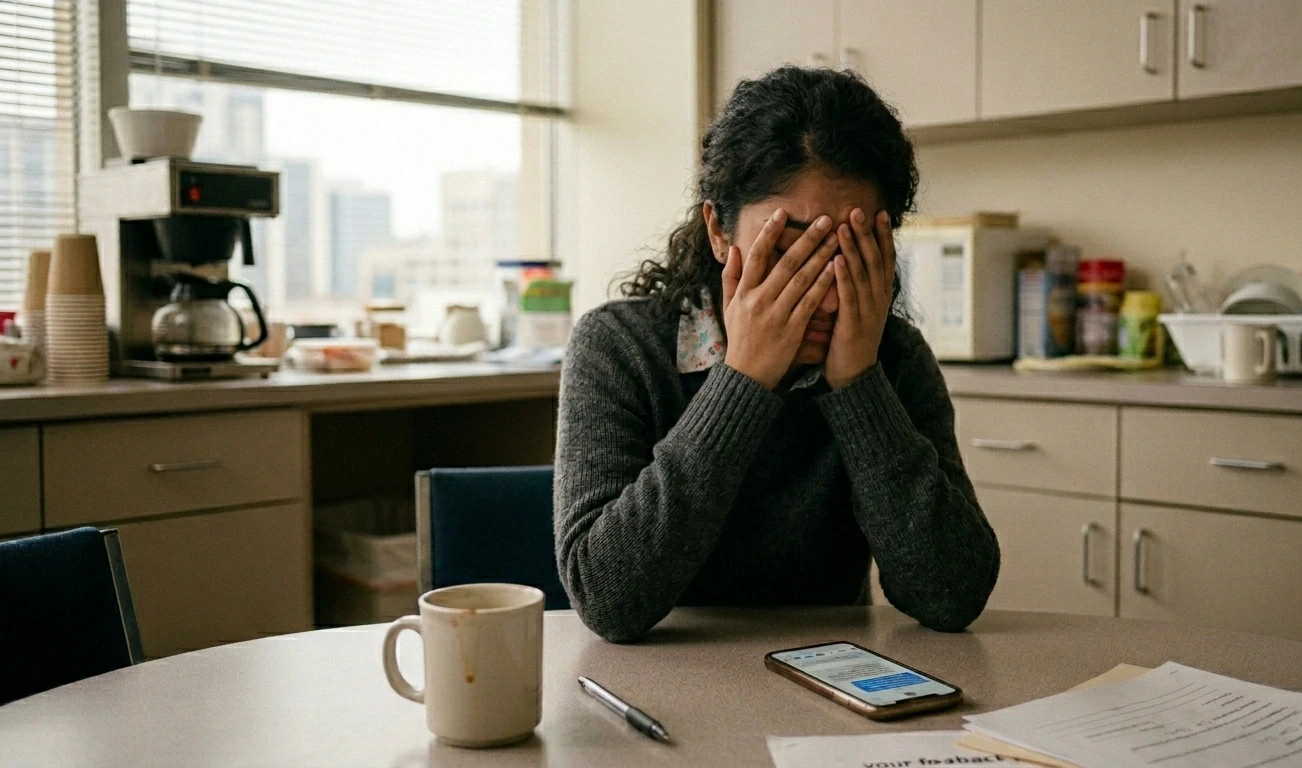
Someone didn't text back on time. Your manager gave mildly critical feedback in a meeting. A friend cancelled plans last minute.
And something inside you just collapsed.
Not hurt in a normal way. Something bigger, faster, completely disproportionate to what actually happened. A wave of pain or shame or rage that came from nowhere and that you couldn't fully explain even to yourself. And then , because the reaction feels like too much , the shame about having it.
If this sounds familiar, it might be rejection sensitive dysphoria. RSD is an extreme emotional sensitivity to perceived rejection, criticism, or failure , the intensity of the response is what sets it apart from ordinary hurt feelings. It's sudden, overwhelming, and often feels completely out of your control.
Here's what it is, what's driving it, and what actually helps.
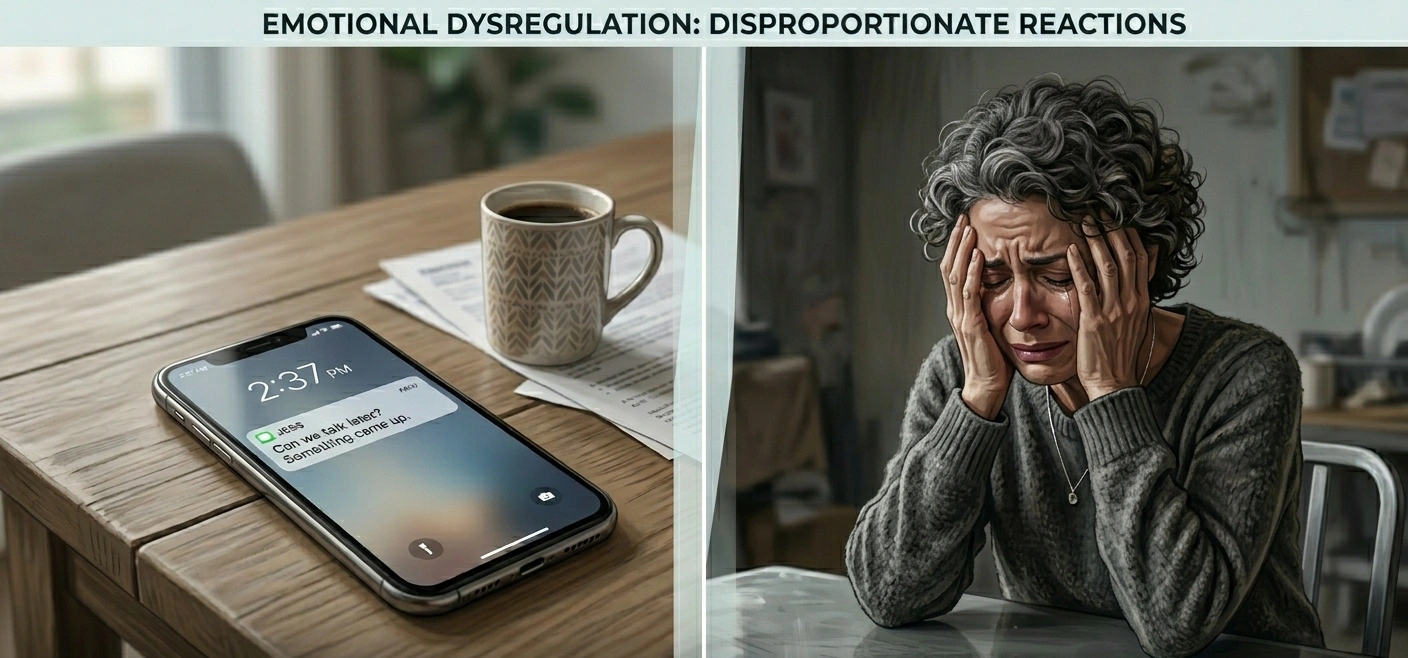
Rejection sensitive dysphoria , RSD for short , describes an intense, often overwhelming emotional response to perceived or actual rejection, criticism, teasing, or the sense that you've disappointed someone who matters to you.
The word perceived is doing real work here. The rejection doesn't have to be real or intended. A delayed reply reads as disinterest. A flat tone reads as disapproval. Neutral feedback lands as confirmation of something you feared about yourself. The brain processes the signal as rejection and the emotional system responds accordingly , fast, intense, and hard to regulate once it's activated.
RSD is most commonly discussed in the context of ADHD and emotions. Research suggests it affects the majority of adults with ADHD, linked to differences in how the ADHD brain processes emotional stimuli and regulates emotional dysregulation. But it isn't exclusive to ADHD. People without a diagnosis experience it too, and the pattern across both groups is largely the same.
What makes rejection sensitive dysphoria distinct from simply being a sensitive person is the intensity and speed. It isn't gradual hurt that builds over time. It's a spike , sudden, acute, and disproportionate. The word "dysphoria" is Greek for difficult to bear. That's accurate.
Read More: Attachment Styles in Relationships: Secure, Anxious & Avoidant
RSD presents differently in different people , but the common thread is always the intensity and the mismatch between trigger and response.
When the trigger hits, the response typically looks like this:
The emotional sensitivity at the core of RSD isn't the garden variety kind. It's the kind that makes someone feel a throwaway comment for days, or relive a critical email at 2am when they should be asleep.
Because the feeling is so painful, people with rejection sensitive dysphoria develop strategies to avoid triggering it , often at significant cost to themselves:
These look like personality quirks or emotional immaturity from the outside. They're actually protective adaptations to a pattern that feels genuinely unbearable. That distinction matters.
Read More: Self-Sabotage: Causes, Signs and How to Break the Cycle
The exact mechanism isn't fully settled, but a few things are consistently identified in both research and clinical experience.
Neurological differences
In people with ADHD, rejection sensitive dysphoria is linked to differences in dopaminergic and noradrenergic pathways , the systems that affect attention, impulse control, and emotional processing. ADHD and emotions are far more intertwined than the disorder's attention-focused name suggests. Emotional dysregulation is one of the most consistent, and most overlooked, features of adult ADHD , and RSD sits at the centre of it.
Accumulated experience
For people without an ADHD diagnosis, RSD-like patterns often develop through repeated experiences of conditional approval, harsh criticism, or environments where love or acceptance felt tied to performance. The nervous system learns to stay hypervigilant for signs that it's coming again , and starts reading neutral signals as threats.
High baseline emotional sensitivity
Some people are simply wired to feel things more intensely across the board. Emotional sensitivity is not a flaw , but when it encounters rejection or criticism without adequate internal resources to process it, the impact amplifies significantly.
Fear of rejection as a foundational belief
Unlike surface-level social awkwardness, fear of rejection in RSD is often a core belief , the deep, mostly unconscious conviction that being rejected confirms something true and terrible about you. Not "they didn't like my idea" but "I am fundamentally not enough."
According to ADDitude Magazine, many adults with ADHD describe RSD as the single most impairing aspect of the condition , more disruptive, day to day, than the attention or hyperactivity symptoms that formally define it.

Rejection sensitive dysphoria doesn't stay inside you. It has a direct impact on how you show up with people , and what those people experience.
This doesn't make someone with RSD a difficult person. It means the pattern creates a relational dynamic that needs to be understood and worked with , not managed around forever. Emotional dysregulation in one person affects the entire relationship system. Naming it is where something can actually change.
Read More: High-Functioning Anxiety: Signs, Symptoms & How to Cope
There's no switch to flip. But there are things that genuinely reduce its impact over time.
Extend the gap between trigger and response. The spike happens fast. The goal isn't to stop the feeling , it's to slow what happens after it. When you notice the wave starting, naming it interrupts the automatic escalation: "This is RSD. This is my system spiking, not a confirmed truth about what just happened." You can't think your way out of the feeling. But you can delay the behaviour that follows it , the message you send, the withdrawal, the conflict you start.
Check perception against evidence. Rejection sensitive dysphoria responds to perceived rejection as intensely as actual rejection. Building the habit of asking , what literally happened here, versus what my nervous system is reading into it , slowly trains the brain to differentiate the two. Not always. Not quickly. But the gap widens.
Tell people close to you what's happening. Uncomfortable but important. When people who matter to you understand that your reaction isn't a measure of what they did , that the intensity isn't proportional to the trigger , it opens conversation instead of shutting it down. Emotional sensitivity doesn't have to be a secret everyone else is quietly managing around.
Reduce the shame about having it. A layer of shame about the RSD sits on top of the RSD itself. The spike. Then the reaction to the spike. Then the spiral. Reducing that second layer , accepting that this is a real, neurologically grounded pattern and not a character weakness , is where fear of rejection starts losing some of its power.
My Fit Brain works with people carrying exactly this , the exhaustion of living in a nervous system that responds this hard and this fast, and the genuine desire to understand it well enough to stop being controlled by it. Mental health counselling that addresses the roots of emotional dysregulation and the beliefs underneath fear of rejection is where real shift happens , not in managing the surface, but in what's driving it.
Read More: How Online Therapy Works , And Whether It's Right for You
If rejection sensitivity dysphoria is consistently affecting your relationships, your work performance, or your ability to function in situations where criticism or evaluation is possible , support isn't optional, it's practical.
RSD rarely travels alone. It tends to show up alongside anxiety and overthinking, attachment patterns rooted in fear of rejection, and the self-sabotage that comes from a nervous system that avoids anything that might trigger the pain. Treating one without the others gets limited results.
A qualified therapist , particularly one familiar with ADHD and emotions or emotional dysregulation , helps you:
Rejection sensitive dysphoria doesn't disappear completely. But people genuinely learn to live with it differently , where the spike is information rather than a command, where the gap between feeling and acting becomes something they can actually work with. That shift is possible. It generally takes more than awareness alone to get there.
Rejection sensitive dysphoria is not a weakness. Not oversensitivity. Not something you'd feel less if you just cared less, or tried harder to take things in stride.
It's a real pattern with neurological roots, a real impact on your life and your relationships , and it deserves a real response. Not dismissal. Not more self-criticism for having it.
If the spike, the shame spiral, the preemptive withdrawal felt familiar reading this , you're not alone in it. Understanding the pattern is where it starts to shift. And you don't have to figure out what comes next on your own.
If RSD is affecting your relationships or your ability to function in situations that involve criticism or evaluation, talking to a qualified therapist can help you understand what's underneath it , and build real tools for it.
The Transformation , 10 sessions at ₹9,999. Same therapist throughout, 30 minutes each, from your phone. 100% confidential.
Rejection sensitive dysphoria is an intense, sudden emotional response to perceived or actual rejection, criticism, or failure , disproportionate in intensity to what triggered it and difficult to regulate in the moment. It's most associated with ADHD but found beyond it. The defining feature is the speed and severity of the emotional spike, not just ordinary hurt feelings.
The clearest signs include:
No. Emotional sensitivity exists on a spectrum and is a normal human trait. Rejection sensitive dysphoria is specifically the intensity and the dysregulation , the inability to modulate the response, the disproportionate pain, the way it derails functioning. It's a pattern with neurological roots, not a personality trait to be overcome with better attitude.
ADHD and emotions are deeply connected in ways that are often underrecognised. Emotional dysregulation , including RSD , is considered a core feature of ADHD in adults by many clinicians, linked to differences in dopamine and noradrenaline pathways. Many adults with ADHD report RSD as more impairing day to day than the attention symptoms that define the diagnosis formally.
Start by naming it to people close to you , it changes how both sides interpret the reaction. Build the habit of checking perception against evidence in the moment. Work on reducing the shame layer that amplifies the spike. And consider mental health counselling, which helps address the fear of rejection and emotional regulation patterns underneath, not just the surface behaviour.

Online
English, Punjabi, Haryanvi
Couple Counseling, Marital Counselling, LGBTQ, Addiction, Depression

It's 7pm. You've been making decisions since you woke up , wh...
 27 Jun 2026 10 min Read 1.1k Reads
Think about the last time a conversation with someone you love went wrong. ...
26 Jun 2026 10 min Read 1.1k Reads 
Nobody told you your childhood was hard. That's part of the probl...
24 Jun 2026 10 min Read 1.5k Reads 
You can be surrounded by people and still feel completely alone. Most...
23 Jun 2026 10 min Read 879 Reads 
Area Of Expertise : Couple Counseling, Marital Counselling, LGBTQ, Addiction, Depression, Family Counseling, Relationship Counselling, Anger Management, Sexual Wellness, Marriage & Couple Counselling
Book a Session
Better mental health at your convince
