


Package of 5 Sessions
- Rs.5,999.00/-
Emotional exhaustion vs burnout, they feel the same but aren't. Here's how to tell them apart, what your body is actually telling you
 Dr. Neha Mehta
  13 Jun 2026
  Mental Health
  891 Reads
  8 min Read
You're tired. Not regularly tired. The kind where sleep doesn't actually fix anything.
You get through the day. Do what needs doing. Come home. And feel, nothing. Or everything at once. Something is wrong and you can sense it, but you can't quite name it. You've been running this way for a while now.
Here's the direct answer: emotional exhaustion vs burnout, these are two different things on the same spectrum. Emotional exhaustion is the earlier warning. Burnout is what it becomes when that warning goes unheard. They overlap, they feel similar, and one quietly turns into the other. But understanding which one you're dealing with changes how you approach recovery.
This is what each one looks like, how to tell them apart, and what actually helps.
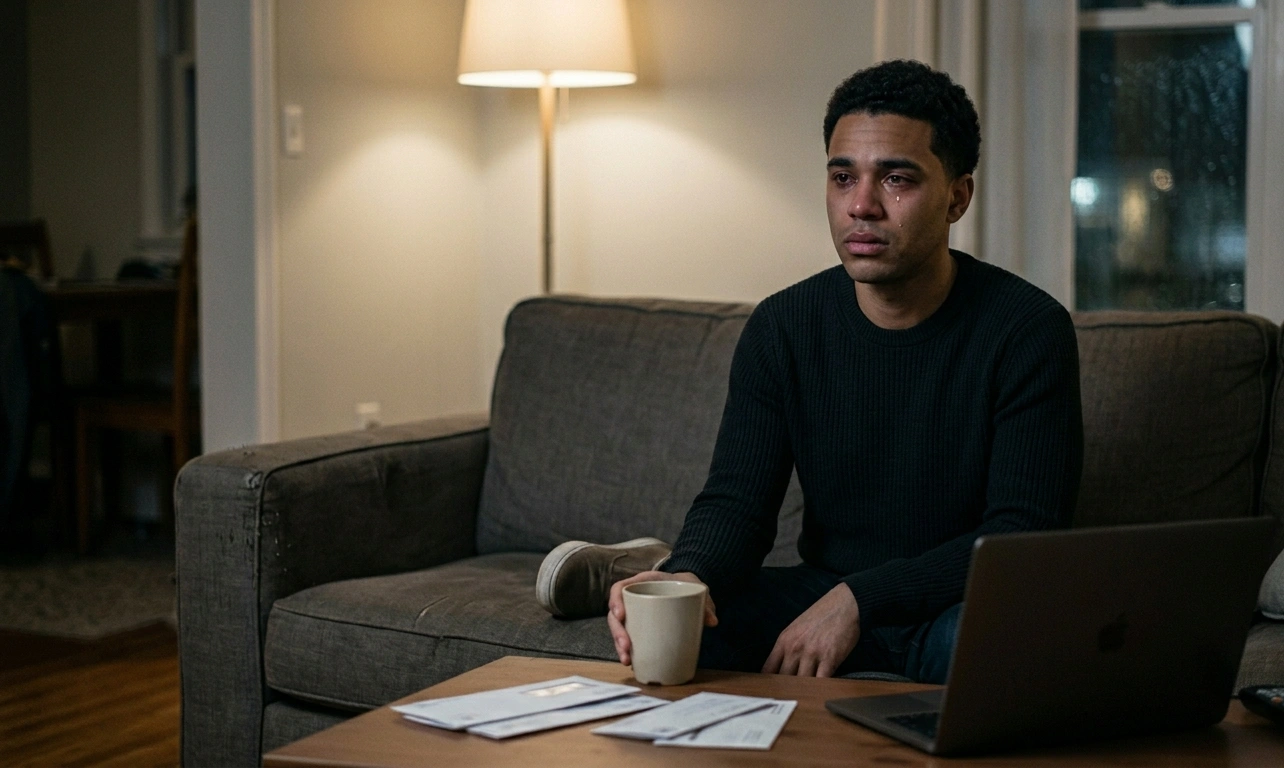
Emotional exhaustion is depletion, specifically emotional depletion. It happens when you've been giving too much for too long. To work, to people, to obligations, to emotional labour that goes completely unseen.
The tank runs dry. And unlike physical tiredness, it doesn't respond to a good weekend. You can sleep nine hours, wake up, and still feel hollow.
Emotional exhaustion symptoms often show up like this:
The word "emotional" is doing real work here. It's not just tiredness. It's the capacity to feel, connect, give, and respond that's depleted. The emotional reserve is empty, and everything that asks something of it, even good things, starts to feel like a cost.

Burnout is what emotional exhaustion becomes when it goes unaddressed long enough.
The World Health Organization classifies burnout as an occupational phenomenon, chronic workplace stress and anxiety that hasn't been managed. Three things define it:
That third one is where burnout separates from exhaustion. It doesn't just drain energy, it drains meaning. You stop believing in what you're doing. You go through the motions. The signs of burnout aren't loud. They're quiet. A slow fade from someone who was engaged to someone who is just… present.
And rest alone rarely fixes burnout. The pattern that created it has to change.
They exist on a spectrum. Emotional exhaustion is typically the earlier stage, the signal. Burnout is what it becomes when the signal is ignored.
|
|
| |
|
|
|
|
|
|
|
|
|
|
|
|
|
|
|
|
|
|
|
|
The simplest test: if you rested properly for a week and felt meaningfully better, you're likely closer to emotional exhaustion. If nothing touches it, if rest isn't moving the needle and the hollow feeling stays, that's leaning toward burnout.
Emotional exhaustion vs burnout isn't a competition for which is worse. It's a question of where you are, because that determines what recovery actually looks like.
Because they overlap so much, emotional exhaustion symptoms and signs of burnout often look identical from a distance. Here's the breakdown:
If you're reading both lists and recognising yourself in most of it, that's information. Not a diagnosis. Just information worth taking seriously.
Read More: Why Am I Always Sad? 10 Real Reasons and What You Can Do About It
Because staying depleted is rewarded.
Stress and anxiety that keeps you productive, responsive, high-output, gets praised. In India especially, exhaustion gets worn like a badge. "I haven't taken a day off in months." Said with tiredness, received as status.
So the emotional exhaustion symptoms get pushed through. The signs of burnout get reframed as "just a rough patch." The gap between early warning and actual collapse gets covered with the next task, the next deadline, the next obligation.
Nobody wakes up one day and suddenly has burnout. It accumulates slowly, invisibly, until something stops working and you can't quite remember when it broke.
Emotional exhaustion vs burnout, both deserve to be taken seriously before they reach a point where you have no choice.
Here's the thing people don't say: recovery from burnout isn't just rest. Rest into the same conditions that caused the problem produces the same outcome.
My Fit Brain works with people at exactly this point, not crisis, not dramatic breakdown, just people who've been running on empty long enough that the strategies alone aren't moving anything. That's what mental health counselling is genuinely for. The quiet, grinding kind of hard
There's a version of emotional exhaustion vs burnout recovery where the strategies help, you rest better, you say no more, you create some space. The surface improves.
And then there's the version where nothing moves. Where you know what you need to do and consistently can't do it. Where the mental fatigue has started bleeding into your sense of self, who you are, what you want, whether any of it matters.
That's when mental health counselling stops being optional.
Therapy for burnout focuses on understanding what patterns drove you here in the first place, the inability to disengage, the identity built entirely on output, the fear of what happens if you slow down. And then building something genuinely different in its place. It's not fast work. But it reaches somewhere that strategies can't.
Recovery from burnout that only rearranges the surface doesn't last. The thing underneath, the way you're relating to yourself and your limits, has to change too. That's where a qualified therapist actually helps.
Read More: High Functioning Anxiety: Signs, Symptoms & How to Cope
Emotional exhaustion vs burnout, both are real, both matter, and both are your nervous system communicating something that deserves a real response. Not a longer to-do list. Not another productivity system. An actual response.
You're allowed to be this tired. And you're allowed to want something more than just managing it better.
The first step is usually just stopping long enough to admit, honestly, how long this has been going on. That's not a weakness. That's the beginning of something different.
Burnout doesn't resolve on its own, especially when the underlying patterns stay the same. A few consistent sessions with a qualified therapist can shift what rest alone can't.
The Transformation, 10 sessions at ₹9,999. Same therapist, 30 minutes each, from your phone. Therapist assigned within 48–72 hours. 100% confidential.
Emotional exhaustion is the depletion of your emotional capacity, feeling drained, flat, or overwhelmed after sustained giving. Burnout is what it becomes when that depletion goes unaddressed:
The clearest signs are fatigue that sleep doesn't fix, emotional blunting where things feel flat, and a shortened fuse where small triggers cause big reactions. You might also experience detachment from people you care about, a "what's the point" feeling that sits quietly in the background all day.
Honestly, it varies, and that's the truthful answer. Mild burnout with real lifestyle change can shift in weeks. Deep, prolonged burnout can take months of consistent support to genuinely resolve. The biggest variable isn't time, it's whether the conditions that caused it have actually changed, or just been rearranged.
Yes, the mind and body aren't as separate as we treat them. Both emotional exhaustion and burnout commonly show up as tension headaches, disrupted sleep, digestive issues, lowered immunity, and persistent fatigue regardless of rest. If your body is consistently unwell and tests come back normal, the emotional load is worth looking at.
Beyond rest, reducing the primary drain, protecting genuine unstructured downtime (not just sleep), saying no more consistently, and not processing alone. Mental health counselling significantly accelerates recovery from burnout because it addresses the patterns underneath, not just the surface symptoms.

Online
English, Punjabi, Haryanvi
Couple Counseling, Marital Counselling, LGBTQ, Addiction, Depression

It's 7pm. You've been making decisions since you woke up , wh...
 27 Jun 2026 8 min Read 1.2k Reads
Think about the last time a conversation with someone you love went wrong. ...
26 Jun 2026 8 min Read 1.2k Reads 
Nobody told you your childhood was hard. That's part of the probl...
24 Jun 2026 8 min Read 1.6k Reads 
You can be surrounded by people and still feel completely alone. Most...
23 Jun 2026 8 min Read 907 Reads 
Area Of Expertise : Couple Counseling, Marital Counselling, LGBTQ, Addiction, Depression, Family Counseling, Relationship Counselling, Anger Management, Sexual Wellness, Marriage & Couple Counselling
Book a Session
Better mental health at your convince
