


Package of 5 Sessions
- Rs.5,999.00/-
Learn how to calm anxiety fast with therapist-backed techniques including breathing exercises, grounding methods, and quick stress relief strategies to reduce anxiety naturally in minutes.
 Dr. Neha Mehta
  05 May 2026
  Anxiety
  858 Reads
  9 min Read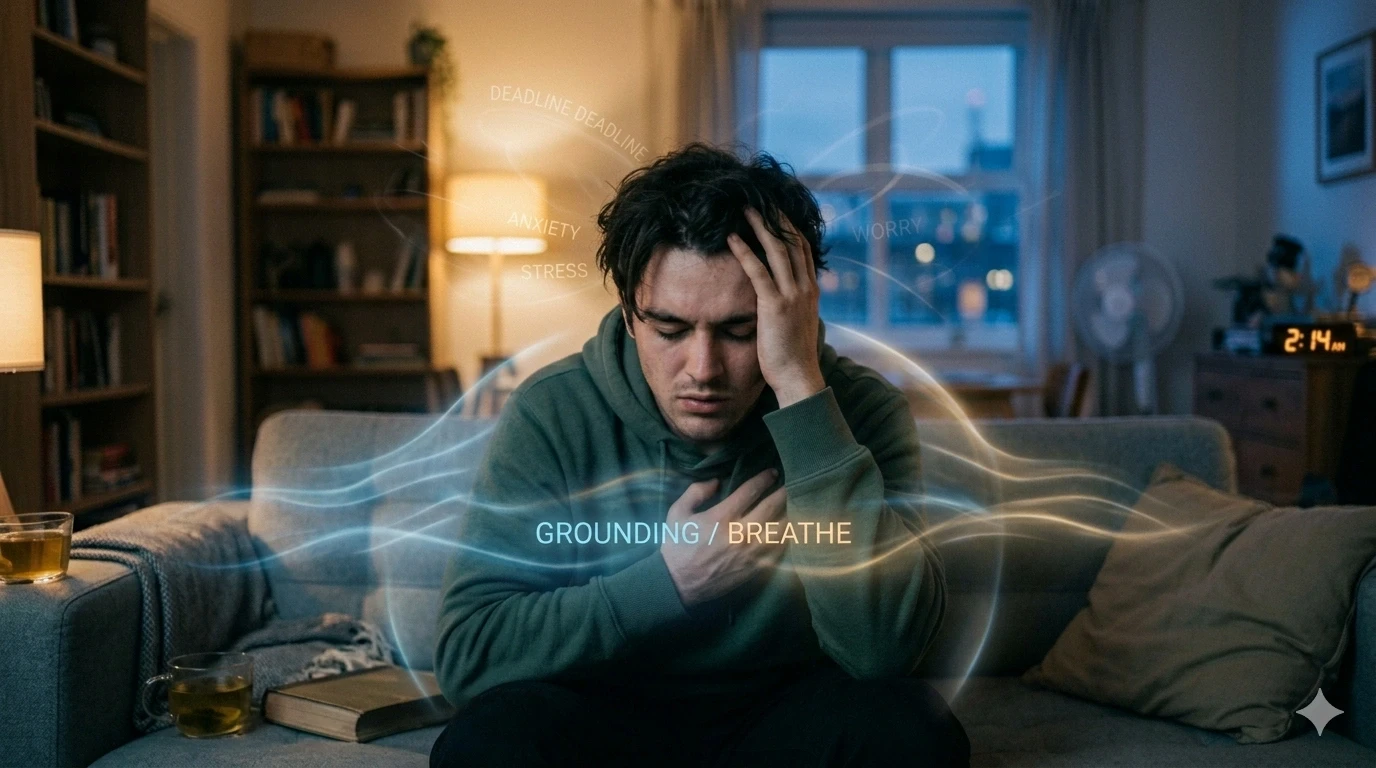
Your heart is racing. Your chest feels tight. Your thoughts are jumping three steps ahead to the worst possible outcome. And you need it to stop — right now.
If you've ever been in the grip of a sudden anxiety surge, you know that generic advice like "just relax" or "stop worrying" does absolutely nothing. What you need are real, physiologically grounded instant anxiety relief techniques that interrupt the anxiety response quickly — not tomorrow, right now.
This guide is exactly that. No fluff, no theory-heavy explanations. Just seven evidence-based, quick ways to ease anxious feelings — some that will help you calm anxiety fast in under five minutes. Whether you need to stop anxiety quickly before a meeting, on a commute, or in the middle of the night — these techniques work.
Before the techniques, a quick explanation that will make them work better for you.
When anxiety hits, your brain perceives a threat (even if it's a thought, not a real danger) and triggers the sympathetic nervous system. Adrenaline surges. Heart rate increases. Breathing becomes shallow. Blood rushes to your limbs. Your prefrontal cortex — the rational, thinking part of your brain — essentially goes offline.
This is why you "can't think straight" when anxious. You're not failing at logic. You're in a biological survival state.
The techniques below all work by interrupting this response and activating the parasympathetic nervous system — your body's built-in calm-down switch.
Read More: Rebuilding Self-Confidence After a Breakup
Box breathing is used by Navy SEALs, surgeons, and athletes to perform under pressure. It's one of the fastest and most reliable ways to calm anxiety fast because it directly regulates the vagus nerve, which controls your heart rate and stress response. If you are looking for instant anxiety relief techniques you can use anywhere, this is the one to start with.
How to do it: Exhale all the air from your lungs Inhale through your nose for 4 counts Hold for 4 counts Exhale through your mouth for 4 counts Hold empty for 4 counts Repeat 4–6 cycles
Focus entirely on the counting. If your mind wanders, that's fine — bring it back to the number. Within three to four cycles, most people notice a measurable drop in heart rate and a loosening of the chest tightness.
When anxiety spirals, your mind is racing into the future — catastrophising, predicting, bracing for impact. The 5-4-3-2-1 technique pulls your attention forcibly into the present moment through your five senses.
How to do it: Name 5 things you can see right now Name 4 things you can touch (and briefly touch them) Name 3 things you can hear Name 2 things you can smell Name 1 thing you can taste
This works because your sensory system is always present-tense. By engaging it deliberately, you interrupt the mental loop of anxious prediction and bring yourself back to "right now, right here — and right now, I am okay." These grounding techniques for anxiety are among the most recommended by therapists for rapid anxiety reduction in real-time situations — and they require zero equipment, zero preparation. For more exercises like this, explore these mindfulness exercises for anxiety that you can practice daily.
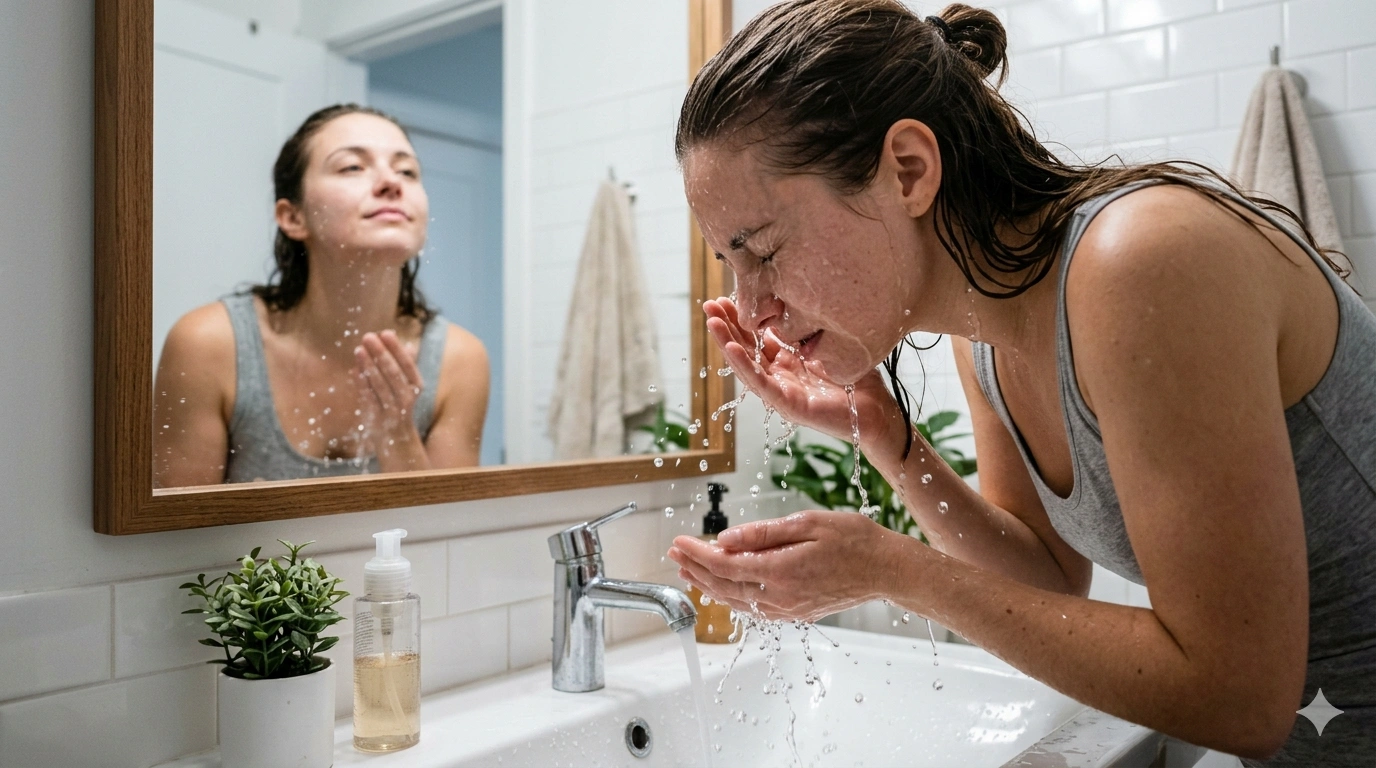
This one sounds almost too simple, but the physiological mechanism behind it is solid.
Splashing cold water on your face, or briefly holding your wrists under cold running water, activates the diving reflex — an evolutionary response that slows your heart rate when your face encounters cold water. This reflex directly counteracts the elevated heart rate of an anxiety response, making it one of the most effective ways to calm an anxiety attack fast when you need rapid anxiety reduction in seconds.
How to do it: Run cold water over your wrists for 30–60 seconds Or: fill a bowl with cold water (add ice if available) and briefly submerge your face for 5–10 seconds Breathe normally throughout
Even just holding something cold — an ice pack, a cold can of drink — in your hands for 30 seconds can produce a calming effect through sensory disruption of the anxiety loop.
Not all breathing exercises work the same way. The key to using breath to calm anxiety fast lies in the exhale, not the inhale.
A longer exhale activates the parasympathetic nervous system directly. The longer you breathe out compared to breathing in, the stronger the calming signal to your brain.
How to do it: Inhale for 4 counts Exhale slowly for 6–8 counts Repeat for 2–3 minutes
Don't force the breath — keep it gentle. You're not trying to hyperventilate in reverse. The goal is a slow, deliberate out-breath that signals to your body: "The danger has passed."
This is one of the most accessible breathing exercises for anxiety relief because it requires no counting patterns, no holding, and can be done in a public place without anyone noticing. According to the NHS, slow breathing exercises are one of the most recommended self-help tools for managing anxiety and stress.
Neuroscience research from UCLA has shown that simply putting words to what you're feeling reduces the intensity of that feeling by activating the prefrontal cortex — the same part that anxiety shuts down.
This is called "affect labelling," and it's as simple as it sounds.
How to do it: Say (out loud or internally): "I am feeling anxious right now." Be more specific if you can: "I feel scared that this will go wrong." Or: "I feel embarrassed and like I want to disappear." You're not analysing — just naming
The act of labelling an emotion creates a tiny but meaningful separation between you and the feeling. It moves you from being inside the anxiety to observing the anxiety — and from that vantage point, it has less power. For more practical approaches like this, explore our guide on simple ways to stop anxiety.
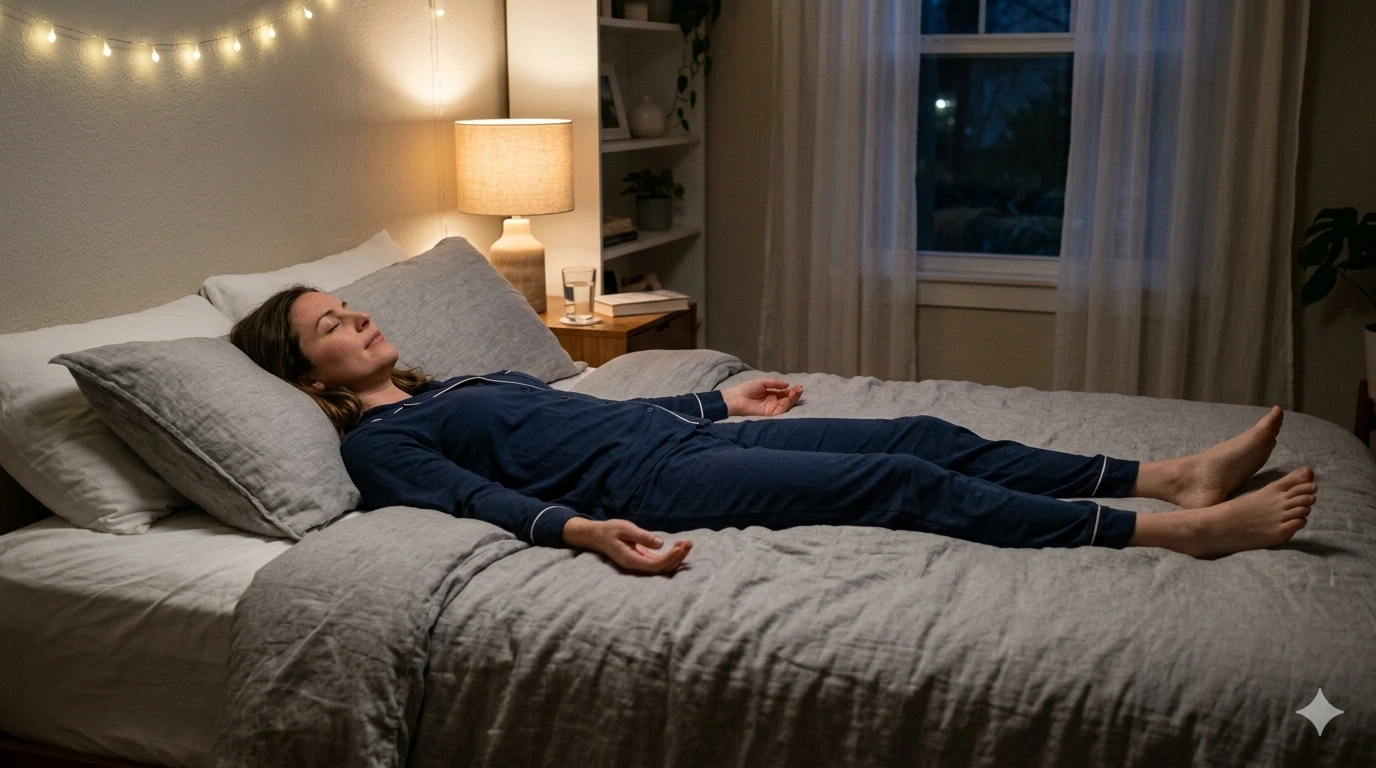
Anxiety almost always lives in the body — tight jaw, clenched stomach, raised shoulders, stiff neck. A quick 3-minute progressive muscle relaxation targets this physical tension directly and is one of the most underrated quick ways to ease anxious feelings that most people overlook.
How to do it: Starting with your hands: clench your fists tightly for 5 seconds, then release completely. Notice the difference. Move to your shoulders: shrug them up to your ears for 5 seconds, then let them drop fully. Tighten your stomach muscles for 5 seconds, then release. Tense your thighs for 5 seconds, then let go. Scrunch your face tightly for 5 seconds, then release.
With each release, consciously notice the sensation of letting go. This physical practice of tension and release teaches your body the difference between held tension and genuine relaxation — and gives anxiety somewhere to go.
Anxiety is energy with nowhere to go. Your body has prepared to fight or flee, but there's no physical threat to respond to — so the adrenaline just keeps cycling.
Even one minute of physical movement can burn off enough of that nervous energy to make the anxiety manageable. You don't need a gym. You don't need equipment.
Options: 10 jumping jacks Walk briskly up a flight of stairs March in place for 60 seconds Shake your hands, arms, and whole body vigorously (this is actually a somatic technique used in trauma therapy)
Physical movement gives your nervous system's alarm signal a resolution. Your body did something with the adrenaline — now it can stand down. It is also worth reading about the common mistakes people make with anxiety to make sure you are not accidentally working against yourself.
You don't need to do all seven. A simple sequence that works well for most people who want to stop anxiety quickly and calm an anxiety attack fast:
Cold water on wrists (30 seconds — physical interrupt) Box breathing (2 minutes — nervous system regulation) 5-4-3-2-1 grounding techniques for anxiety (2 minutes — present-moment anchor)
Total: under 5 minutes. Many people report going from a 7/10 anxiety level to a 3/10 using just this combination — genuine rapid anxiety reduction without medication or equipment.
The techniques in this article are excellent for managing acute anxiety in the moment. But if you find yourself frequently in the grip of anxiety — if it's disrupting your sleep, your work, your relationships, or your ability to enjoy life — quick relief techniques are not the full answer.
Anxiety disorders respond extremely well to professional treatment. Cognitive Behavioural Therapy (CBT), Acceptance and Commitment Therapy (ACT), and other evidence-based approaches address the root causes of anxiety — the thought patterns, avoidance behaviours, and nervous system dysregulation that keep you stuck in a cycle.
If anxiety is a regular presence in your life, you deserve more than coping. You deserve to genuinely heal. At My Fit Brain, licensed therapists offer Online Anxiety Therapy India — confidential, convenient, and tailored to your specific experience of anxiety. For those who experience sudden, intense spikes, Panic Attack Therapy Online India is also available with therapists trained specifically in breaking the cycle of panic.
You're Not Weak — You're Wired This Way
Anxiety is not a personality flaw or a sign that you can't handle life. It's a biological response that evolved to protect you — and sometimes that response misfires in the modern world.
Learning how to calm anxiety fast is a skill. Like any skill, it takes practice. The first time you try box breathing in the middle of a spiral, it might feel awkward. By the tenth time, it might take thirty seconds to feel calmer.
Start today. Try one technique. Then try another. Build your own toolkit.
And if the anxiety feels bigger than a toolkit can manage — reach out. That's not giving up. That's the smartest thing you can do. Book a confidential session through Online Anxiety Therapy India at My Fit Brain — available online, affordable, and tailored to what you are going through.
Physiological techniques like box breathing, the cold water reset, and the extended exhale can produce a noticeable reduction in heart rate and physical tension within 3 to 5 minutes. Grounding methods like 5-4-3-2-1 work slightly faster for mental spiralling — most people report feeling more present within 2 minutes. However, results vary depending on the intensity of the anxiety episode and how practised you are with each technique. First-timers may need a few attempts before the technique feels natural enough to be effective.
Anxiety is typically a persistent state of worry or unease that can build gradually, while a panic attack is an acute, intense surge of fear with strong physical symptoms — racing heart, difficulty breathing, dizziness, and a feeling of losing control — that peaks within 10 minutes. Many of the techniques in this article (box breathing, grounding, cold water) work for both. However, during a full panic attack, it can be very difficult to engage cognitive techniques. In that case, focus purely on the physical: cold water, slow breathing out, and planting your feet flat on the floor. If panic attacks are occurring regularly, speaking with a trained therapist is strongly recommended.
Breathing is the one bodily function that is both automatic and consciously controllable. When you deliberately slow and deepen your breath — particularly with a long exhale — you stimulate the vagus nerve, which runs from your brain to your heart, lungs, and digestive system. Vagal stimulation activates the parasympathetic nervous system (your "rest and digest" mode), directly countering the sympathetic activation (fight-or-flight) that drives anxiety. This is why breathing exercises for anxiety relief are among the most evidence-backed, fastest-acting tools available.
Yes, several of them are completely invisible. Box breathing, the extended exhale, affect labelling (naming your feeling internally), and the 5-4-3-2-1 grounding exercise can all be done silently and without any visible movement. The cold water and movement techniques require a bathroom or brief excuse to step away, but even these take under two minutes. Many people find it helpful to have one "invisible" technique they rely on for public settings (usually a breathing method) and another for private use.
There are a few common reasons breathing exercises don't produce results. First, many people try them when anxiety is already at a very high level — at that point, the nervous system is so activated that it takes longer to respond. Practising these techniques when you're calm builds the neural pathway so they become more effective under pressure. Second, some people inadvertently breathe from the chest rather than the diaphragm, which limits the vagal activation. Third, if anxiety is severe or has an underlying clinical basis, self-guided techniques alone may not be sufficient — this is where professional support through a licensed therapist can make a significant difference.

Online
English, Punjabi, Haryanvi
Couple Counseling, Marital Counselling, LGBTQ, Addiction, Depression
It's 7pm. You've been making decisions since you woke up , wh...
 27 Jun 2026 9 min Read 1.1k Reads
Think about the last time a conversation with someone you love went wrong. ...
26 Jun 2026 9 min Read 1.1k Reads 
Nobody told you your childhood was hard. That's part of the probl...
24 Jun 2026 9 min Read 1.5k Reads 
You can be surrounded by people and still feel completely alone. Most...
23 Jun 2026 9 min Read 874 Reads 
Area Of Expertise : Couple Counseling, Marital Counselling, LGBTQ, Addiction, Depression, Family Counseling, Relationship Counselling, Anger Management, Sexual Wellness, Marriage & Couple Counselling
Book a Session
Better mental health at your convince
