


Package of 5 Sessions
- Rs.5,999.00/-
Learn how to deal with panic attacks using therapist-backed techniques to stop panic attacks fast, manage anxiety symptoms, and regain calm with practical grounding and breathing methods.
 Dr. Neha Mehta
  09 May 2026
  Anxiety
  712 Reads
  10 min Read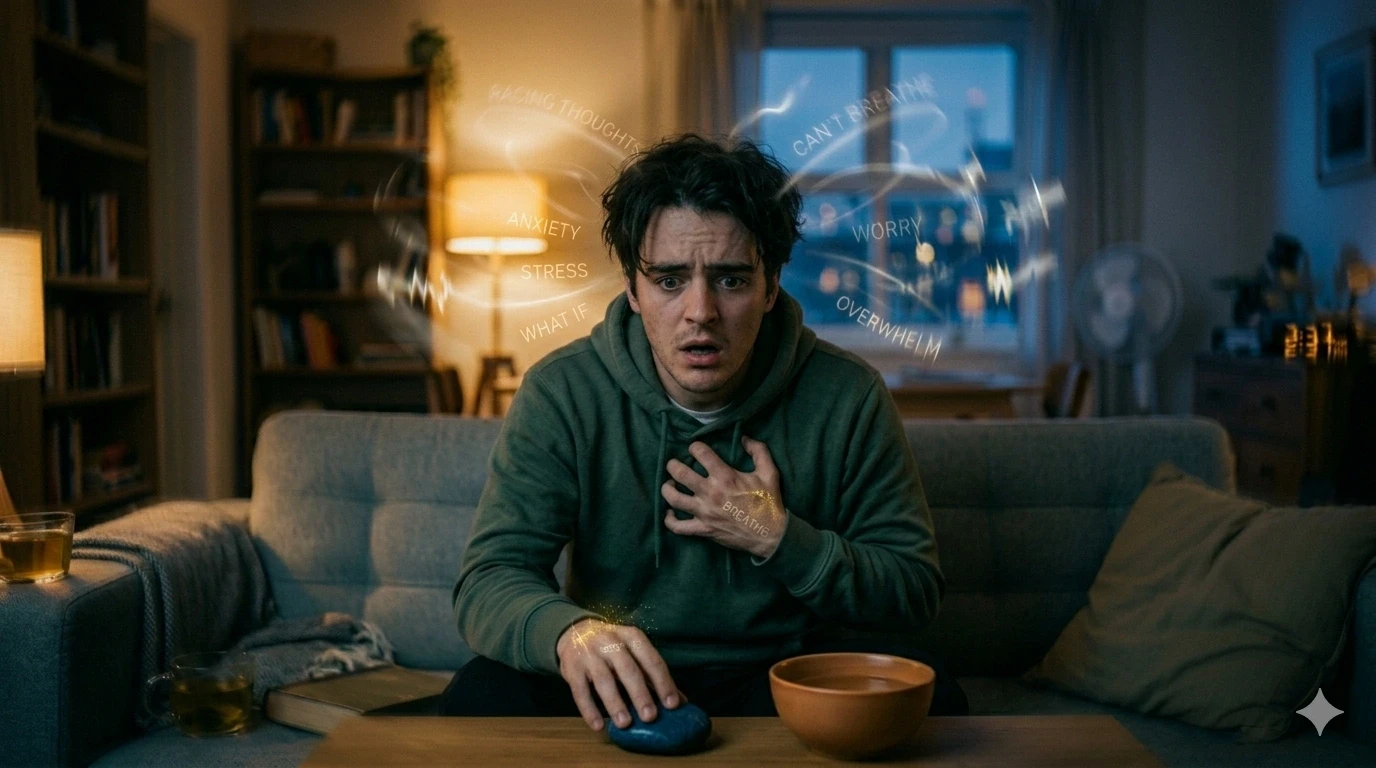
Your heart is pounding so hard you can hear it. You can't catch your breath. Your hands are tingling. Your chest feels like someone is pressing down on it with both hands. And the worst part? Your brain is screaming that something is terribly, catastrophically wrong.
If this sounds familiar, you've likely experienced a panic attack — one of the most physically intense and emotionally frightening experiences a person can go through. And yet, as terrifying as they feel in the moment, panic attacks are not dangerous. They cannot hurt you. And with the right tools, you can learn exactly how to deal with panic attacks before they take over your life.
This guide will walk you through the most common panic attack symptoms in adults, how to stop a panic attack fast when one strikes, and what to do if they keep coming back.
A panic attack is a sudden surge of intense fear that triggers severe physical reactions — even when there is no real danger. It is your body's fight-or-flight system firing at full force for no apparent external reason.
During a panic attack, adrenaline floods your system. Your heart rate skyrockets. Your breathing becomes shallow and rapid. Blood is diverted to your muscles. Your body is preparing to run from a threat that doesn't exist — and the physical sensations of that preparation feel overwhelming. Understanding these panic attack symptoms in adults is the first step to managing them with confidence.
The most important thing to understand about panic attacks: they always peak and pass. How long does a panic attack last? Most reach their peak within 10 minutes and fully subside within 20 to 30 minutes. Knowing this doesn't make them less frightening — but it gives you something to hold onto when you're in the middle of one.
The single most powerful thing you can do when a panic attack begins is name it.
Say to yourself — out loud if possible — "This is a panic attack. It is not a heart attack. It is not dangerous. It will pass."
This matters more than it sounds. Panic attacks feed on fear of the panic itself. The moment you catastrophise the physical sensations ("I'm dying, something is really wrong"), you add more adrenaline to the fire and the attack intensifies. The moment you recognise it as a panic attack, you interrupt that loop.
It takes practice. The first few times, it won't feel believable. Keep saying it anyway. This is the foundation of knowing how to deal with panic attacks effectively.
The instinct during a panic attack is to fight the sensations — to tense up, resist, and try to make them stop. This is the worst thing you can do. Resistance amplifies panic.
Therapists often teach a technique called riding the wave — borrowed from surfing. Instead of fighting the wave, you go with it. You observe the sensations without attaching meaning to them. You don't try to push the panic away. You let it rise, peak, and fall.
Tell yourself: "I feel this. I am not in danger. I will let this pass through me."
This approach, rooted in mindfulness and acceptance-based therapy, significantly reduces the duration and intensity of panic attacks over time. For practical techniques to build this skill daily, explore these mindfulness exercises for anxiety that complement this approach well.
Rapid, shallow breathing during a panic attack causes hyperventilation — which makes the physical symptoms significantly worse. Dizziness, tingling in the hands, chest tightness — these are all made worse by over-breathing, not by the panic itself.
Slowing your breathing is one of the most direct ways to interrupt the physical panic cycle and is one of the fastest answers to how to stop a panic attack fast.
How to do it: Breathe in slowly through your nose for 4 counts Breathe out through your mouth for 6–8 counts Focus entirely on making the exhale longer than the inhale Repeat until your breathing feels more controlled
The extended exhale activates the parasympathetic nervous system — your body's calm-down switch. You are not just distracting yourself. You are directly altering your physiology. This technique also works brilliantly if you need to know how to calm anxiety fast in other high-stress situations beyond panic attacks.
Read More: Avoid these mistakes if you have anxiety
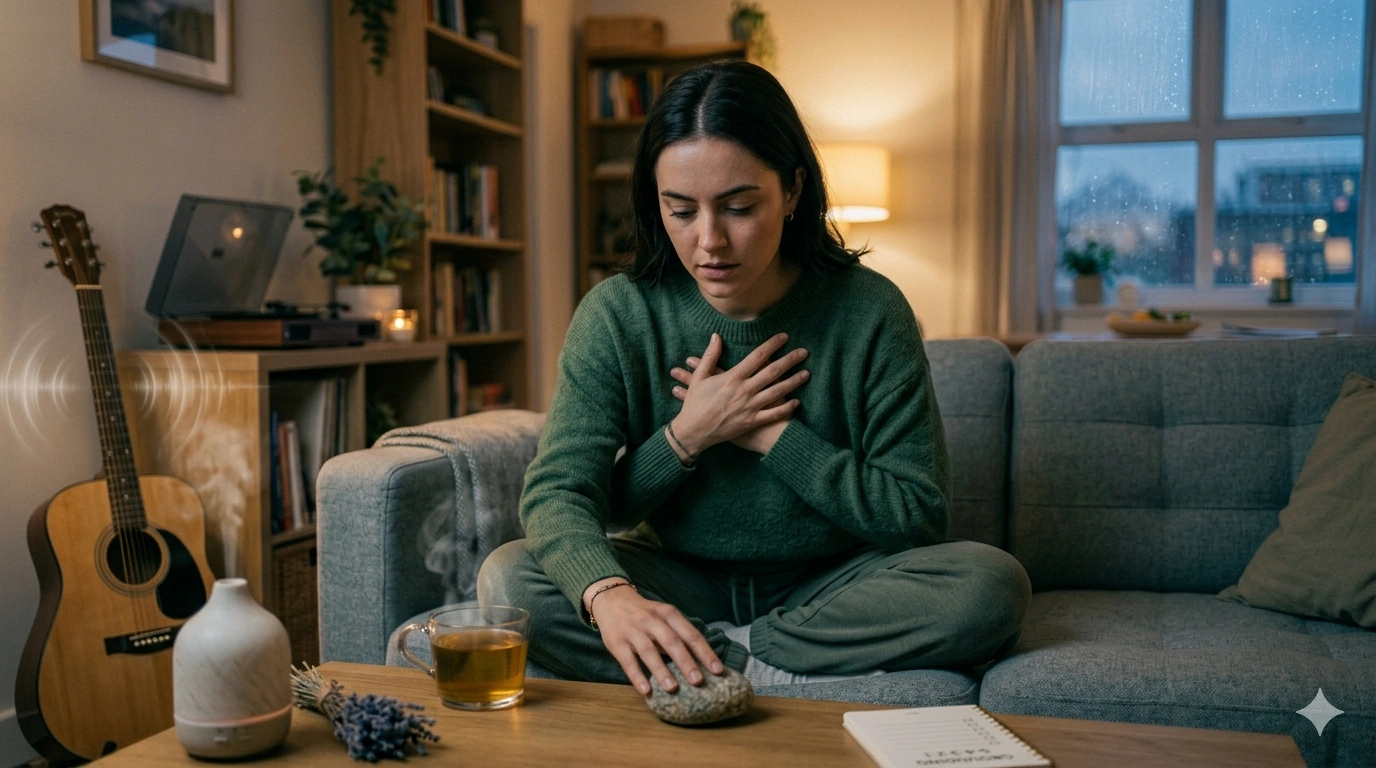
When a panic attack pulls you out of the present moment and into catastrophic thinking, panic attack grounding techniques pull you back into your body and your immediate surroundings.
The 5-4-3-2-1 technique is one of the most reliable panic attack grounding techniques available — it works by engaging all five senses:
Name 5 things you can see right now Name 4 things you can physically feel (your feet on the floor, the chair under you) Name 3 things you can hear Name 2 things you can smell Name 1 thing you can taste
Do this slowly and deliberately. The goal is to anchor your awareness in the present — where, right now, you are safe. This is exactly what to do during a panic attack when your mind starts spiralling.
One of the biggest reasons panic attacks are so terrifying is that their physical symptoms overlap with those of a heart attack — chest tightness, rapid heartbeat, shortness of breath, dizziness. Understanding the difference between panic attack and anxiety attack or cardiac events is genuinely life-important.
Here are some key differences: Panic attacks peak quickly (within 10 minutes) and fully resolve. They are often triggered by stress, a specific thought, or come seemingly out of nowhere. Heart attacks in adults typically involve a dull, crushing chest pain that may radiate to the arm, jaw, or back. Symptoms generally worsen over time rather than peaking and subsiding.
According to the NHS, if you are unsure whether you are experiencing a panic attack or a cardiac event — especially for the first time — always seek medical attention. Once a cardiac cause has been ruled out, repeated episodes can be addressed as panic disorder.
6. Use the TIPP Skills in the Moment
TIPP is a set of crisis-coping skills developed in Dialectical Behaviour Therapy (DBT) that are specifically designed to rapidly reduce the intensity of overwhelming emotional states — including panic. These are among the most effective tools for what to do during a panic attack when breathing alone isn't enough.
T — Temperature: Splash cold water on your face, or hold ice in your hands. Cold water activates the dive reflex, which slows heart rate within seconds. I — Intense Exercise: 30–60 seconds of jumping jacks, running on the spot, or any vigorous movement burns off the adrenaline surge. P — Paced Breathing: Return to the slow exhale breathing described above. P — Paired Muscle Relaxation: Tense a muscle group on your inhale, release completely on your exhale. Repeat through your body.
Any one of these four can help. Combined, they are powerful enough to significantly reduce panic attack intensity within two to three minutes.
After a panic attack, the most natural impulse in the world is to avoid wherever it happened, whatever triggered it, or any situation that feels similar.
This is the behaviour that turns occasional panic attacks into panic disorder.
Avoidance tells your brain that the situation genuinely was dangerous — and makes it more likely to trigger a panic attack next time. Every time you face a feared situation and survive without catastrophe, you are teaching your brain: "this is safe."
This doesn't mean forcing yourself into overwhelming situations without support. It means gradually, carefully, with professional guidance if needed, continuing to engage with life rather than shrinking away from it. Read our guide on simple ways to stop anxiety for practical day-to-day habits that support this process.
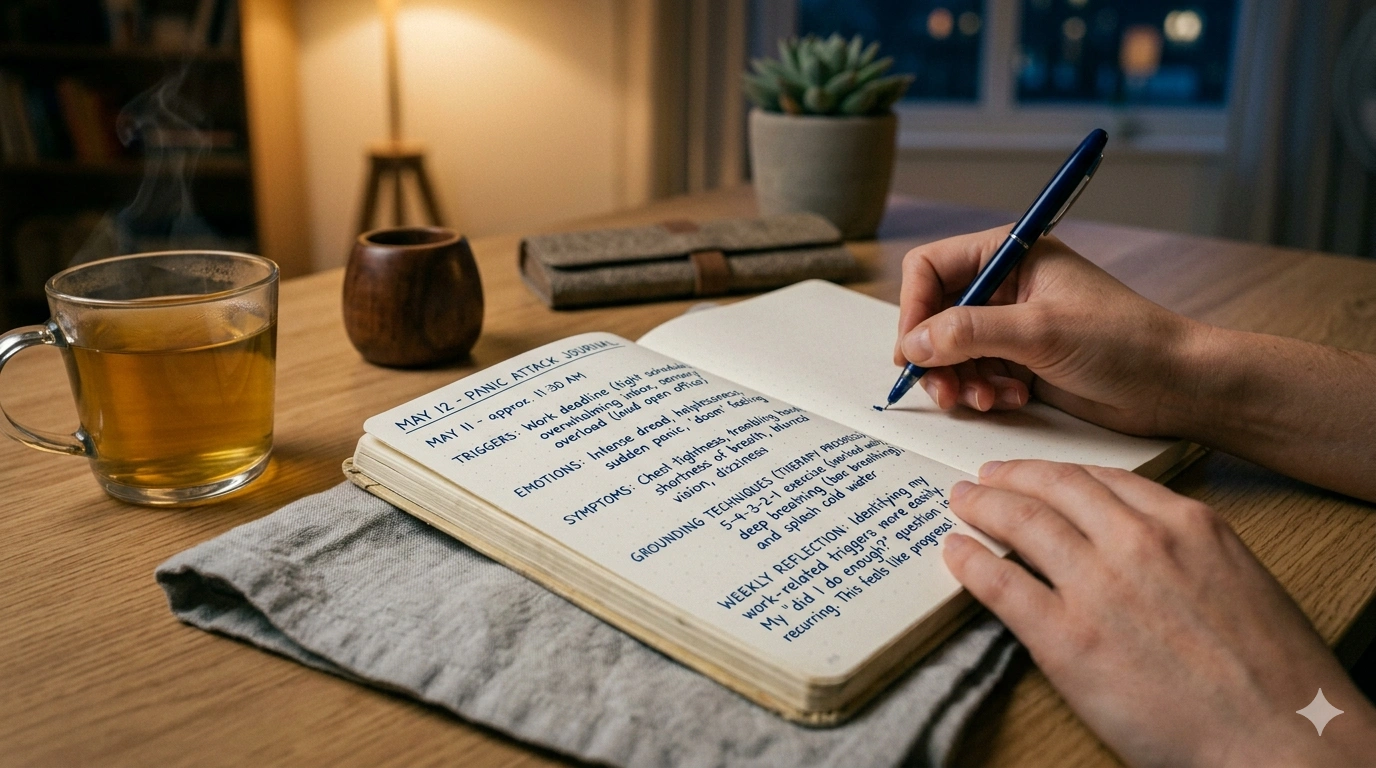
Keep a simple record: when did it happen, where were you, what were you doing, what were you thinking just before it started?
Over time, patterns emerge. Some people discover their panic attacks are connected to specific times of day, physical states (hunger, fatigue, caffeine), social situations, or thought patterns. Identifying triggers gives you something to work with — in therapy and on your own. This is one of the most underrated strategies for anyone learning how to deal with panic attacks long-term.
Suffering through panic attacks in silence is both exhausting and isolating. Telling a trusted person — a friend, a family member, a partner — that you experience panic attacks has several benefits.
They can help ground you during an attack rather than panicking themselves. They can help you avoid avoidance behaviours. And the simple act of saying "I struggle with this" out loud reduces the shame that often keeps panic disorder stuck in place.
A single panic attack, while frightening, doesn't always indicate a clinical problem. But when panic attacks recur regularly and begin to change your behaviour — causing you to avoid places, situations, or activities — that is panic disorder, and it responds extremely well to professional treatment.
Cognitive Behavioural Therapy (CBT) is the gold-standard treatment for panic disorder, with research showing significant improvement in most patients within 12–15 sessions. The therapy works by directly addressing the catastrophic thoughts and avoidance behaviours that keep panic going. You can also read how to calm your mind during stress for additional day-to-day strategies that support recovery.
If panic attacks are happening more than once a month, affecting your work or relationships, or causing you to change your daily routine to avoid potential triggers — please don't wait. This is exactly the kind of problem that therapy addresses directly and effectively.
At My Fit Brain, licensed therapists are trained specifically in panic disorder and anxiety. We offer Online Anxiety Therapy India for those dealing with broader anxiety alongside panic — confidential, affordable, and accessible from anywhere in India.
Panic attacks are one of the most frightening things a person can experience — but they are also one of the most treatable. You are not going mad. You are not physically ill. Your brain has learned a pattern that is causing you suffering, and that pattern can be unlearned.
Start with the techniques in this guide. Practice them when you are calm so they are available to you when the panic comes. And if the panic keeps coming — reach out. Help is closer than you think.
Book a session through Panic Attack Therapy Online India at My Fit Brain — confidential, evidence-based, and available from anywhere in India.
Panic attacks and heart attacks can feel very similar — both involve chest pain, racing heart, and shortness of breath. Key differences: panic attacks peak quickly (within 10 minutes) and resolve completely, while heart attack symptoms tend to worsen steadily over time and may include pain radiating to the jaw or left arm. If you are experiencing chest pain for the first time and are unsure, always seek emergency medical help to rule out a cardiac cause.
Most panic attacks reach peak intensity within 5 to 10 minutes and fully subside within 20 to 30 minutes. In some cases, milder lingering anxiety may remain for a few hours. They do not last indefinitely — even though in the moment it can feel that way. Knowing this while you are in the middle of one is one of the most helpful things you can hold onto.
Yes. Nocturnal panic attacks are real and are actually more alarming than daytime ones because they wake you from sleep with no warning. They follow the same physiological pattern and the same strategies apply. If nocturnal panic attacks are occurring regularly, speaking to a therapist is particularly important as the sleep disruption compounds the anxiety cycle.
Not necessarily. Many people experience a cluster of panic attacks during a stressful period and never have another one. Others develop a pattern that requires intervention. The key variable is what you do after the first attack — avoidance behaviour is the biggest predictor of panic disorder developing. With the right therapeutic support, most people with panic disorder recover fully.
Medication is one option and can be helpful for severe or frequent panic attacks, particularly in the short term while therapy begins to take effect. However, most clinical guidelines recommend CBT as the primary treatment, as it addresses the root patterns rather than just managing symptoms. The ideal approach depends on the individual — a qualified therapist or psychiatrist can help you decide what is right for your situation.

Online
English, Punjabi, Haryanvi
Couple Counseling, Marital Counselling, LGBTQ, Addiction, Depression

It's 7pm. You've been making decisions since you woke up , wh...
 27 Jun 2026 10 min Read 1k Reads
Think about the last time a conversation with someone you love went wrong. ...
26 Jun 2026 10 min Read 1k Reads 
Nobody told you your childhood was hard. That's part of the probl...
24 Jun 2026 10 min Read 1.4k Reads 
You can be surrounded by people and still feel completely alone. Most...
23 Jun 2026 10 min Read 807 Reads 
Area Of Expertise : Couple Counseling, Marital Counselling, LGBTQ, Addiction, Depression, Family Counseling, Relationship Counselling, Anger Management, Sexual Wellness, Marriage & Couple Counselling
Book a Session
Better mental health at your convince
